Calvis Wyant Podcast
40 Years of Design+Build: Tony Calvis, Sr. on Luxury Homes, Client Experience, and What Comes Next
- Published
- Runtime
- 57:27
About this episode
What makes a custom luxury home last for decades?
In the first episode of The Calvis Wyant Podcast, Tony Calvis, Jr. sits down with founder Tony Calvis, Sr. to revisit the firm’s 40-year history. Their conversation traces the partnership with Gary Wyant, the evolution toward design-build, the value of involving a builder early, and the trust and accountability required to guide clients through a deeply personal investment.
Episode transcript
Read the full conversation below. Select any timestamp to continue from that point in the video.
- 00:00 As a construction worker, I realize just how important the plans were. Here we are 40 years later. We’re doing good work, and people love what we do, and we love the people we work for. And I don’t know how much more we can ask out of life. Okay, so before we get into the episode, I want to give a little context for the conversation you’re about to hear for our first episode of the Calvis Wyant podcast. I’m sitting down with Tony Calvis Sr. who founded Calvis Wyant 40 years ago and has had a front row seat to how custom home building has changed across the valley since then.
- 00:31 We talk about how the company got off the ground, why he and Gary Wyant started using the design-build model early, and what he’s learned about building the kind of team and systems that lead to the best client experiences. It’s a conversation with many stories even I hadn’t heard before. So I hope you find the deep dive into Calvis Wyant as fascinating as I did. With that, please enjoy this conversation with my dad, Tony Calvis Sr. Obviously, you’re the one person on this podcast that probably doesn’t need an introduction, but do you want to share who you are and where we’re at?
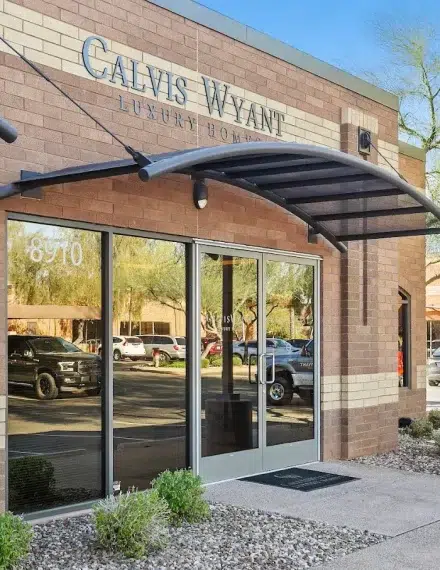
- 01:04 Well, although I don’t need it. I’m Tony Calvis Sr. It’s nice to be here with you, Tony Calvis Jr. And, we are at the offices of Calvis Wyant Luxury Homes and in our conference room. Great. So this year is 40 years at Calvis Wyant, right? Surprise to all. Yes. Yeah. Seems like yesterday. So. Well, speaking of, looking back at yesterday, when you do look back at the last 40 years, what do you think has been consistent since the beginning? Since the beginning of the company?
- 01:38 A lot of things. A lot of basics have been consistent. And the first one is that we’ve had good fortune. I prefer to think of it as the. By the grace of God, we’re still here. Been through a few ups and downs, but, another basic is, it started with Gary and I, and we’re both people that really care about how people live in their homes and want to give them a great experience.
- 02:11 That sounds self-serving, but it’s true. This is this is a business where you do important work and you can’t take your eye off that ball. And we’ve slowly, over the years added other folks, other like, like minded people. And, I’m, I’m sure we’ll talk about some of those things today or some of those people today, but, I’m very proud of them all. And they all share that same, that same characteristic.
- 02:39 They have that heart to serve. And that’s what you need when you’re going to build people’s homes. With you and Gary meeting pretty much at the beginning, what were the hopes that you both had for building Calvis Wyant from that early stage? Gary, I’ve always felt, is a lot more insightful than I am. My hopes were to be able to make payroll. That was the first basic survival thing we needed to do. But, I knew that this was a career that we both enjoyed and that we did, and it was just a thrill for me to be able to work side by side with Gary every day, and still is.
- 03:22 So, I think my hopes were a little bit, more basic. Can we keep this going? Can we keep working? Can we serve enough people? Can we get the word out. And I think that only later, say, maybe ten years in, we realized what we had. And this is something that really was special.
- 03:51 We were doing some things that just, you know, seemed like other people weren’t doing, and we were starting to get recognized for it. So at that point, we started dreaming a bit more about what could be. And, so here we are 40 years later, I think 22 staff, hundreds of homes behind us and a thriving business, frankly, for which we’re all very grateful for.
- 04:20 So, yeah, I don’t know what else you could ask for. We’re doing good work, and people love what we do, and we love the people we work for. So, you know, that’s, sorry to ramble, but I don’t know how much more we can ask out of life. You mentioned, that about ten years, and you started to realize, okay, we have something special here. What were those signs, you know, that told you that? And what? What gave you the, momentum or the energy or the motivation to continue to build and know that this was a life pursuit that you both wanted?
- 05:01 I think that, well, hey, Gary and I had kids, so we knew we needed to feed them. So, of course, there’s always that, you need to do something with your life, and you need to do something that has meaning in someone else’s life, which is very fulfilling work. I think that, one of the early wins that really taught us something is we had some favorite clients, Barry and Kathleen.
- 05:34 I hope they I hope they hear this sometime. And they built three houses with us over those first few years. And so, like, we always joke that we want our customers to say, “I’m just a little bit ADD,” and get tired of the one house and think of something else they’d like to have. And, the confidence that people showed in us and just the joy that our work brought to them is something Gary and I find very fulfilling.
- 06:07 Yeah. So let’s move into some of the lessons that you’ve learned along the way, and let’s focus in on from a client experience standpoint, as clients have come into Calvis Wyant throughout the years, what preconceptions do you notice they have coming in that they suddenly find is perhaps very different, or the opposite of what they were thinking they were walking into?
- 06:40 Maybe it’s the perception of, they’ve met with a few different builders or design-build firms and come with some preconceived notions around how the process is. I don’t want to put words in your mouth, but I’m curious what clients have been coming in with and seeing as, “Oh, Calvis Wyant is different in some capacity than what I expected.” Yeah. The, To answer that question, I’m going to put it in the framework of, of, the changes we’ve seen since the beginning. And I think that’s what you’re asking.
- 07:14 Before we got into business, you know, 40 years ago, there was, there was, it was it was a prevailing thought that you would start with the architect and you would get your house drawn. And then at some point, far into that process, near the end, when you had a permit, you would you would go seek out a builder or perhaps a couple builders to give you a price for it. That was what we call, a design-bid-build model.
- 07:51 And with the increasing complexity of today’s homes, that design-bid-build model doesn’t allow you any flexibility because you’ve gotten so far in the design before you bring in what’s going to be your longest relationship. And that’s the builder. That it makes more sense now to do a design-build process, where your whole team is put together.
- 08:21 So occasionally we’ll run into somebody that still has sort of that mindset about, hey, I’d like to get the design work done and then go seek out people who might build, but that usually reflects, either budget constraints. So the client may be is in danger of designing something that they can’t afford. because there’s no one there to tell them what their choices mean along the way.
- 08:52 Or it’s maybe just antiquated thinking, but on our our system now of starting with, we need to be, we need to be involved at the pre-construction stage all the way through so that what you put your time or client’s put their time and effort and emotion into actually does come true. There’s oh, there’s statistics out there about the number of homes that don’t get built.
- 09:21 They get designed but don’t get built. And we just didn’t ever want to have a client with that experience. We wanted to make sure that if they design something, it’s going to be built. Well, and I think that speaks to, how I don’t know if innovative is the right term, but ahead of the curve, you work with being a design-build team between you and Gary. You know, you saw this from as early as the 80s.
- 09:51 What was the environment like in that time? How much more frequent were designs happening? But builds weren’t, right. I think back then we looked up statistics, and I can remember it being like 80% of the homes that were designed in the absence of the builder. Basically, 80% of the projects that architects designed never got built. And that was just horrifying once we learned that.
- 10:21 Yeah. And, so, my background as a construction worker, I realized just how important the plans were. If the plans, you know, it’s back before the term garbage in, garbage out probably was ever born. But if the plans weren’t any good, then the project wasn’t going to go smoothly. You were having to figure out too many things on the fly. What could have been fixed with an eraser early on. This is back in the paper days, before CAD. There was no CAD.
- 10:52 What could have been fixed with an eraser in 30 seconds now took a day’s worth of work and demolition to fix later in construction. So, we just realized at some point that no one was doing design-build. It was truly an innovative thing back in the 80s.
- 11:21 In this area, in this market, eventually, I think a lot of good builders have sort of caught on to this is the way it has to be done. And that whole, that whole notion of go out and go out and design the home in a vacuum without the rest of the team involved, particularly the builder. That just doesn’t work anymore. So, how big was the team in those early days?
- 11:50 Let’s call it the first decade. Yeah, just you too. Well, it was just us. You know, we started out, we started out just the two of us in, a guest house slash office next to my house, and it worked really well. Did our first subdivision together, had all of our client meetings there, and, that’s, that’s where we started out.
- 12:20 And we eventually got to the point where, we needed to hire our first superintendent and then our second superintendent, and, your your mom informed me at some point that, you know, a secretary is not a wife, and a wife is not a secretary. So we probably needed to get into a real office and have real staff. And what when was that first office? Pardon me? When did you move into that first office?
- 12:52 Boy, that would have been probably early 90s. Yeah. Early 90s. So I can’t tell you exactly when it was. It was a couple, three offices ago. Yeah, yeah. We’re, this office here is a lot nicer in our first one. Yeah. So, I know culture is important to you, and the team. And making sure that everyone is, not only able to do their best work, but also in an environment where they have the collaboration and the ability to rely on each other.
- 13:29 How did you how did you craft that in the beginning when you didn’t have a team and you started to bring on people? What were you looking for in those individuals, and was there anything that you did in the team-building phase of Calvis Wyant in those early days that you still try to maintain? Now? Well, you don’t when you don’t have a team, it’s pretty easy to keep your quality control because you’re doing everything. So, there’s no limit on your quality, except either you’re it’s up to your, your knowledge, you know, or lack thereof about certain things.
- 14:07 The as far as bringing people on, our first employee we brought on, retired a few years ago now and Mike shared our desire to, frankly, just do everything right. I think that, the characteristics we look for today, that’s one of the big ones. You have to be wired to work here.
- 14:37 You have to be wired for accuracy, and it has to bother you. And when you go home at night, if something’s not right at work. Right. I think that’s true of all of us that, you know, we take our work home with us sometimes and, but it’s more of it’s more of just how you’re made. You just have to have that personality. And there’s no employment test that’s going to tell you that always.
- 15:07 It’s, but, you know, when we’re hiring us, the first thing people have to care. They have to care. Of course, they’ve got to have the competence to do the job. But if people have the right attitude, I would rather hire someone younger or newer to the business if they have the, if they have the personality characteristic of caring very much, and they have a desire to be accurate. I will admit that since I’m the kind of person that, you know, for better or for worse, I probably live to work rather than work to live.
- 15:46 And you can’t have a company full of those folks. And there’s nothing wrong with being a little more well balanced. But the work has got to be that important to you. And, that’s just a key thing because of what I think is just how precious and sacred people’s homes are. You know, you’re always going to have a little drywall crack in a garage someday or whatever. Sure. That’s what we’re there for.
- 16:17 We’ll touch that up for you. It’s got to be just right. And that’s. And that’s something that, Gary and other architects we’ve met and worked with over the years really do. Well, but, that might be one of your future questions in this interview about your floor plans. Yeah. No, I, you’ve given me a few different paths we can go down. Yeah, just from that statement alone. But let me first ask, so you want to hire people that care?
- 16:48 Do you have a moment or a few moments in the past where you were really proud of how the team cared for a client? Yeah, I know that there are plenty, but yeah, maybe one of the early ones where you said, okay, this thing is working. This team cares about the customer as much as I do. There are. Yeah, I it’ll be tough to pick a specific one out. I’m going to think about that, but there’s, there’s countless examples just every week of where somebody at Calvis Wyant is going above and beyond.
- 17:28 That’s the long hours the superintendent might put in. It’s the extra work that a project manager might do to value engineer. The choices to, you know, obviously cost is always a concern. It may not be the exact it may not be the total project, but it’s always it’s always a concern. We want to respect that money, what it took to earn the money to build the house.
- 17:56 So yeah, it’s just we don’t have to, how do I put this? If I had to think about those as exceptions rather than rules, I could probably come up with them just off the top of my head. But I can’t, because it’s a culture. It’s just what we do. And we back each other up, because, getting back to your question about teams, teams are easy when there’s only one or two members.
- 18:30 When it’s one member, hey, that team is easy. But with all the, with the complexity of the homes, homes are so different now than when we started and so complex that you need a team. And I think it’s very, very difficult for the, for the entrepreneurial carpenter, a guy like myself back then when we started. If you’ve got an entrepreneurial edge, it takes more now than what it did back then. It was very easy back then to build a 3,000-square-foot house on a flat lot in North Phoenix or Scottsdale and you could get it done in 90 days.
- 19:09 That doesn’t happen that way anymore. Now, yeah. This is a totally different, totally different world. There was no internet there was no Wi-Fi. We had pagers first. I remember my first cell phone. It would make the car horn blow, and you would sprint back to try to get there in time. Yeah. I don’t I can’t remember all my bill was, but it was a lot of money for that cell phone bill.
- 19:37 So the car started honking one. Yes. Yeah. Because you couldn’t carry it with you. It was in it was based in your in your truck. Yeah. Come on. Okay. Yes we have. So. Obviously when someone is considering building their own custom home, whether they’ve done it before or not, they have to look at the businesses out there that are going to be some form of architecture as well as the build, as well as perhaps a few other add ons.
- 20:08 But really, I think the surface level is looking for the architecture that you like and the build quality. But perhaps even more important, it’s going to be finding the right team. Right? So to circle back to this, focus on teamwork. How does that translate into the client experience? You know, assuming all other factors are equal, they have an architect that they like. They have a builder that they like.
- 20:37 How does the team impact their their project? I you can build a custom home. You can’t build a custom home efficiently and well without everyone on the team coming together. I liken it to making a movie. You might have name brand actor.
- 21:06 You might have a great director. You might have great location, great story, but if there’s not that synergy there, if there’s not that connection between the leading characters. If it’s not shot well, and those are things you’ve taught me. If it’s not shot well, it just doesn’t come off.
- 21:35 It just doesn’t come off. And there’s that, and there’s a missing spark there, and it can be that way with custom homes, too. But, we’re very lucky here in north Scottsdale, in Paradise Valley. Scottsdale and Paradise Valley is predominantly, you know, the majority. Of our work. But, we’re very lucky here that we have a lot of we have a lot of really great, talented people. And one of the talents that we bring to a project that we’re on is a high level of organization.
- 22:13 Because if the team is if the team is pleasantly coordinated together, then they’re not fighting each other. They’re, you know, you might be fighting a hillside lot that’s difficult to build on, but you’re all working collaboratively together to come up with the best solution for that topography, if that makes sense. Of course. Yeah. Yeah. So how do you give a client the confidence and the clarity that this is a team worth trusting that when we get those difficult hillside lots, the team is going to rally together and figure it out, as opposed to becoming a team that suddenly doesn’t trust each other or, you know, doesn’t collaborate as well.
- 23:01 What, how do we instill that confidence and clarity into the client? I like to say it’s, well, it’s several things. You know, first of all, we have to go back to, we have to look at what the client’s experiencing, what their needs are. They have a problem. They want a group of people to come together, and they don’t even know who the group of people should be to create what is going to be one of the most important endeavors they embark on.
- 23:36 So if they have those fears. And I think that after frankly, 40 years of being around, one of their first fears that they’re going to put aside is that okay? These people have the experience and they have the track record. We’d like to talk to them. They come in, frankly. And the first thing I do every time a new client is considering us is when they’re in, I introduce them to as many people that are in the office that day as possible.
- 24:15 And chances are that we’ve spent some time with them looking at houses and perhaps our other projects under construction, so that, so that they can, they can just get a sense of the people, that work here. Social media has been a real boon Is that the right way to put it? It’s been a real advantage that we didn’t have before, because people can see on LinkedIn and other sites that we post just what our customers and what our workers, you know, the people that are part of our team, what they have to say.
- 24:56 So I think, I think that research that they do is just like anything else you buy. It’s more extensive. You know, you just look at how many stars on Amazon and you go ahead and buy that, you know, branded toothpaste. But this is this is more than that. So I also the thing that we like to discuss early on and discern from our clients, do they want a process?
- 25:27 Are they process oriented? There are some folks that are a bit more free-thinking and like a more free or organic process. Organic to me, usually means like I will just kind of see how it develops. And that’s okay. From a design standpoint. Usually the topography and the site and the views and just the conditions are going to lend themselves to certain solutions, design solutions.
- 26:00 And so, yeah, that just has to come together and be developed. But the process of how we do this has to be a process. Otherwise it’s such an expensive and such a complicated, endeavor that you just lose track, you get sideways and pretty soon you lose that collaboration because on one hand is doing something the other hand is unaware of, rather than talking to each other.
- 26:30 And so that’s where it goes. Yeah. So we’re big process people. Part of this too is and I’ll freely admit that not everyone should build a custom home. If it’s something that you want to do for your family, for your spouse. You know, for your partner in life, it’s something you want to do together. That usually that usually makes for a really good start.
- 27:01 That’s the kind of folks, we’ve built lots of homes for people that were just, you know, they’re not really a family. Everybody’s grown up and gone, but just for themselves. And then we’re looking for looking for people that want to transform their lives through how functional and beautiful this house is going to be, how it will serve them. So, long winded answer, but I hope that gives you a feel. Just how we look at this and I think that clients, you know, they appreciate the clients that appreciate the process and, are willing to wait to devote the time that they need to give to it.
- 27:48 Then we just sort of click right off the bat. It doesn’t take a long to do that. By the first meeting, we generally know if we’re a good fit. And frankly, if someone’s not a good fit for Calvis Wyant, I look at it as my obligation to perhaps suggest one of our friendly competitors and who are mostly friends, that, might be a better fit. You know, there’s nothing wrong with that. And, people helped me when I was starting out.
- 28:17 And sometimes a smaller company and a newer company might, might be a better fit for that particular project. Yeah. So, I was actually going to ask on this, but what? Walk me through your process for deciding if a client is a good fit or not. And the joke around here being that you will just as easily talk them out of doing business with Calvis Wyant, as you will talk them into it, right? So, you know, clearly from a customer standpoint, they should feel that confidence that we’re not going to bring them into a project that’s not right for them.
- 28:53 But what’s your personal take on that approach? My approach every time the phone rings and someone wants to talk to us about their project, my first thought is, I’m going to serve these folks. And, I’m not adjusting my halo. I’m perhaps fortunate enough now that, at this point in my career, I need to make a friend more than I need to make, to make a sale.
- 29:22 Okay. And if were not the right fit, well, we’ll, you know, like, say, we’ll help them, we’ll guide them. We’ll point them in another direction. I have a lot of friends in this industry and a lot of other good builders. I know that they may be in a different path in their career. They might be able to take on a smaller project that, you know, we might be overkill for, if I can put it that way. So I’m happy to help them. But, yeah.
- 29:52 So that’s that’s my approach. First off, find out if we’re appropriate for a number of different reasons. These custom homes are, are expensive. Not more expensive than the other homes in those custom home neighborhoods. But they are, you know, if someone’s got a budget that, they really they’re really going to be stretching and straining to do what they want to do. Then I’ll be the first to tell them, let me talk you out of this.
- 30:23 Don’t waste a lot of time, energy and emotion. And money on, on going down this path because I’m going to tell you and, I like to I like to point out and say, if you’re looking, a price range of, say, $3 million in today’s I don’t know how evergreen that this remark will be, but at $3 million in today’s, North Scottsdale market, it’s what you might spend in a Toll Brothers community which Toll Brothers builds a great home and a lot of amenities in those communities.
- 30:55 But they buy their toilets 600 or 1,000 at a time. We can’t get those economies of scale just building one home. You know, we might need four potties and so on, and you just carry that through the whole, construction process. And so it’s pretty easy. And the biggest thing is, they buy the land cheaper too. Those economies of scale aren’t there, but, yeah.
- 31:26 So price range is usually the first thing we’re going to help them understand what they’re looking at. Now, people that live here in our, you know, spend weekends looking at model homes and they kind of get that already, but particularly from folks coming from other parts of the country. People from California come here and are, you know, thrilled with the pricing. Someone from the Midwest may be surprised if it’s, you know, if it’s not a major city and what things cost here.
- 31:58 Yeah, but speaking of cost, you look at Toll Brothers who might be able to build off of their scale, but how is Calvis Wyant a good steward of every dollar that goes into a Calvis Wyant home to where those dollars spent still have tremendous value in comparison to, you know, 1 to 1 of the, you know, homes that are done at scale.
- 32:27 Well, obviously, if we have a little more budget to work with, We can do things that production builders can’t because they really need to market to, a particular price range. And they have plenty of competition, you know, between each other and, so trying to I want to be gentle here, but for example, we have trade relationships that go back in many cases to the very beginning.
- 33:07 Just had a meeting on site the other day and the pool builder had to remind me, “Tony, I was with you when you started in your first spec house in Sunset Hills. I helped you with that pool,” and I had forgotten that. But they’ve been consistently working with us. This particular individual, Bob. And he’d been with the company for 40 years. So. And he had to remind me of that. And I was embarrassed that I didn’t recall.
- 33:35 But we’re looking for people that are just the best in class, can give us fair pricing, but more importantly, great. Great. Reliability. great staffing. They can give us the job at a fair price and do all the extras that we might demand. And there’s a lot in there. There are a lot of those extras that contribute to the longevity of the home and that will easily make the, an ideal customer will easily see the point when we’re talking about the long term value versus the initial price.
- 34:20 So I, you know, in my mind you’d why would you save money on the roof underlayment? I’d rather give you a roof for 5% more that I know is not going to leak for the next 25, 30 years. You know, I don’t I don’t want to give you a roof that will only get you through a warranty period. It’s just, you know, it’s just not what we do. And spending just a little bit more gives you so much more in peace of mind later.
- 34:52 And, you know, it’s a roof leak. You know, it doesn’t matter how fast we fix it. it’ll… yeah, you’ll never think about that roof the same way afterwards. Yeah. So let’s talk more about the accountability that Calvis Wyant brings. And I think of it as the full homeowner life cycle. How we are there, you know, perhaps as early as them purchasing the lot, because we have multiple realtors, in house.
- 35:21 But, beyond that, you know, you have clients that are still coming back to you 20, 30 years later, maybe even 40 years later. You know, and you’re always willing to help. So what is the accountability, and what is that mindset that Calvis Wyant has around how we look at our customers and the relationship that we’re building with them? We had to wrestle with this early on when we, you know, frankly, you know, didn’t have the resources and the money in the bank to always be able to do things, that were judgment calls: were they really a warranty issue or is it, you know, you know, thankfully now, if something costs us a few bucks to do and it’s a judgment call that judgment’s made in the customer’s favor every time.
- 36:13 Now, if something’s not been maintained, we’ll certainly help them get it back into, you know, proper condition, but it’s just an easier way to live when I tell people, look, I want to come over for a barbecue or, you know, a cup of coffee some morning, whatever. I want to see them socially, I want to see. I want to find out how the kids are doing. And knowing you got grandkids now and just, etc.
- 36:43 To me, that’s the relationship I want. I don’t want that. It’s just not worth it to any of us here at Calvis Wyant to have any contention about, something not being taken care of. Now, having said that, we do have a maintenance division on houses. Houses need maintenance. They’re big things out in the elements. So, they do need to be maintained. And our maintenance division, TouchPoint, helps our customers take care of that, but that’s just so much.
- 37:19 It’s just so much easier. And, again, we don’t have a lot of problems, frankly, because of a high degree of organization. We have a checklist mentality for everything we do, and it just makes QC so much easier. I after 40 years, we’ve collected and assembled all the mistakes we’ve made and we make sure we don’t make the same mistakes. We make our new ones. We make sure that our checklists and our processes and procedures take into account what’s gone wrong in the past to make damn sure it doesn’t go wrong in the future.
- 37:57 So what is it about building and living in a Calvis Wyant home that 20 years later, a client still feels as attached to that home as when they first built it. You know, we have plenty of examples of clients texting you, you know, decades later saying they still love their home. What is it about Calvis Wyant that gives that longevity that you spoke about?
- 38:28 A combination of things. One of the big factors is that we prefer to do really functional floor plans. It doesn’t mean that we lack anything, or that we have to sacrifice the beauty or the, artistic touches or the detailing, but there are some really simple things. Every house we build, especially in the last, you know, 25 years, I’d say, which we try to use three foot doors everywhere in the home.
- 39:05 We try to. Yeah. Every floor plan will have a powder room. It’ll be around a corner somewhere. So it’s you know, your guests have a sense of privacy when they’re finding the powder. We make sure that there’s 48 inches minimum and more like 52 inches between the countertop and the refrigerator so that everyone can work. You know, they got a countertop on the island, and, so everyone can work in the kitchen and feel comfortable. There are a thousand little things like that, every floor plan of ours, you walk in and you immediately have a sense of arrival because you’ve got an appropriately sized foyer before you’re thrown into the family room, living room.
- 39:52 And there’s always glass to see something that’s either a gorgeous backyard. It might be a mountain view. It could be, a stunning pool. And, spa entertainment area, or whatever. So, kids bedrooms are on one side usually. The primary is going to be on the other side, just for some privacy. Things make sense. You’re pleasantly led down vestibules in hallways to your destination.
- 40:30 I’ve always said that, a good floor plan design is one where you don’t feel like you’ve seen the whole house at once. There’s. You go around a corner. Now, we’re not creating bowling-alley, hallways and doing things to you know, put things at the other end of the house or just for the, just for the feel of it, but it’s just the way you design it. That, those so first off, it’s, it’s just a great floor plan that functions well and supports how most people like to live. And if it’s a custom built home, it supports how that family likes to live.
- 41:12 But we always do it as a service to that family, we always, we always want to accommodate their particular request for their lifestyle in a way that would be easily modified or adaptable to the next buyer. Because, you know, life changes, you know, ten years later you may decide, hey, I’ve got different needs now. Kids are gone. There’s, you know, I want to do something different now.
- 41:42 So and you’ll sell that house. And we’re proud of the fact that our house is usually sell just a little quicker, all things being equal, you know? So, as far as that goes, I drifted here, but is that what you’re looking for here? I think so, yeah, I know it. Clearly there is a function to the house that leads to the form and beauty of what we design and build. And the house fits the lifestyle of the client really well. And the client doesn’t have to fit themselves into the design of the house. Right?
- 42:18 It’s just a natural extension of them. Yeah, we should trade seats. Well, that’s much better said. Well, so it took some time to get to the understanding that you have around that function and how people live and the homes that they design. From ten, 20, 30 years down the road. How is luxury living going to look? What new elements do you believe are coming around the corner in terms of how people will live in and appreciate the home that they build?
- 42:51 In these spaces? Right. Well, no one knows what the future, especially in these times, you know, there’s no one knows what life is going to be like. Especially right now, it’s very exciting about how AI is likely to change everything but basic needs are always going to be there. You’re going to need your private spaces. You’re going to need your entertainment spaces. You’re going to need a home that is comfortable.
- 43:20 And, you know, both from, you know, personal comfort as far as, you know, temperature and keeping the elements out and filled with light, to be pleasant to live in. But, I think the basics of human nature are obviously going to be the same. We’re not going to change, but we’re going to have new devices and new ways of doing things. I’ll give one example. We still build a few theater rooms, but things are different now.
- 43:50 No longer are we doing, you know, the theater with a screen that rolls down and using projection. Now we’re doing everything with, you know, these wonderful digital monitors that are, I don’t know, an 85-inch TVs. Kind of a normal TV right now, just for the living room. And, so. But one big change in society is that we have all of our entertainment on, on a laptop or on our iPhones, and so we don’t need to all gather in one spot to watch that movie, and we can see it in, in a lot of different places and at home.
- 44:37 And that’s the way things work now. Boy, it’s fun to sit down and watch a movie together, but pace of life is pretty, it’s pretty fast these days compared to when we first started. No longer can we build those houses in 90 days. Yeah, yeah. And looking back, the living room wasn’t designed to have a TV as the centerpiece, but it became that. And now it may shift away again. Yeah, yeah. You know, maybe TVs will go away.
- 45:06 I, you know. So, Yeah. So I don’t know, predicting the future is pretty tough. So, not, you know, not my not my specialty. Well, let me ask you in a different way then, what do you hope for Calvis Wyant over the next ten, 20, 30 years? Well, we’re embarking, I should say, not undertaking. I shouldn’t say that with my advanced age. We’re embarking on a few changes here at Calvis Wyant. Until the last few years, we hadn’t really spent a lot of time on succession.
- 45:48 There’s a natural order in the people here. Just through the ages and, you know, tenure here and stuff where it’s just kind of obvious who’s leading the charge. And, but we’re succession planning, heavily now because there’s some young people here that are going to be the future of the company. Building companies, small business in general, is pretty tough to carry on to the second generation of management after the original founders are retired and happily playing golf somewhere.
- 46:28 But that’s sort of, Gary’s and my desire for it now is to keep going. So we’re putting those we’re starting to put those systems and people in place. I see Calvis Wyant as something pretty special. We’ve, we’ve managed to do it for 40 years. And the secret sauce may not be the recipes may not be all written down yet as we want them to be, but a lot of them are.
- 47:06 And, the historical knowledge is there, and that’s something, again, that’s very special. I don’t think we want to we want to let that go. And I don’t know I don’t know of any company that can thrive without giving its next wave of managers and, you know, employees, a runway.
- 47:34 So, there are a lot of people your age rather than my age in the company now that want a future. And they have the and they have the ability to do far more perhaps, than Gary and I ever did. So it was exciting to see. Hey. Yeah. So what. What do you personally want to accomplish before you retire? I’m. I’m not one of those people that has many regrets.
- 48:05 You know, I think that I think that life is pretty good. Been pretty fortunate. So, you know, a lot of my goals, you know, hey, been been married 47 years. Not a lot of people get that lucky. You know, your mom and I did, so that’s just a big checkbox right there.
- 48:36 And so, personally, wife is good. My goals, I think, professionally, are to just see the next wave of folks come up and continue to inspire me by the knowledge and the and the progressive attitudes they have. So, it’s very fulfilling to just watch, and things that things that, you know, Gary and I may have put in place, you know, 35, 40 years ago.
- 49:14 And there’s still truisms here. Just take Gary’s department, if you will. His area of expertise is, one of them is just, creating readable plans. We’ve talked about it the other day where just the different line weights, graphically represent to the observer, to the craftsman working from these plans exactly what’s to be done and not every set of plans looks that way, but that catalog of, a catalog of how we do design work and how we put it on paper in this case, how we put it into CAD, makes all the difference.
- 50:01 Because our, you know, one of the, one of the functions of your building plans is that you need to tell people of varying skill levels and sometimes not great English speakers either. What’s to be done? And that picture truly is worth a thousand words. But that picture has got to be drawn right. So, it’s going to be very exciting to see what AI does. I don’t know that it’ll put architects out of business necessarily, but it’ll make us all a lot more efficient and just help with our thought processes and come up with the ideas that, you know, before, it might have taken a day and a half to kind of think about it before you could come up with what you’re going to do.
- 50:48 And suddenly they’ve got three alternatives, and you might marry two of them to come up with your fourth. It’s the right one. So yeah, it’s exciting times. Yeah. And I don’t know that we have enough time to go into AI, but can we perhaps look at as AI starts to replace a lot of the tasks that we do, what are going to be the. What are going to be the opportunities that human to human relationships have?
- 51:20 In this business specifically where AI will hopefully free up the time for humans to be more present with our clients, our our, our partners, all the craftspeople. What do you think is going to be most important in this AI revolution in terms of how humans interact with each other? Well, selfishly, I’m looking forward to, you know, when every time there’s a report I need to look at or we need to look at as a company, particularly in the accounting department, just looking at financials, is something that I’m going to love it when we can plug everything into AI and it’s going to tell us right now with, you know, maybe half of the effort, what’s going on on every project at any moment.
- 52:19 That’s just going to be just it’s just going to make things just so much easier to manage. Scheduling is something too. At the end of every day, it goes into our logs of what’s happened. And I think AI would be really helpful with that. I know some, especially commercial companies are leading the way on this. And it hasn’t trickled down as much yet to the residential. But having that agent, is that the right word?
- 52:55 Sure. Yeah. Having that AI agent tell you, “Okay, hey, great, because of this delay over here, because the boat with your slabs couldn’t be unloaded at Long Beach because there was a backup of boats that had to be unloaded. And so you’re going to get your slabs two weeks late. That’s going to put your countertop installers behind on three different jobs a month from now.” Just being able to put together that downstream effect from all this stuff is going to be game-changing for us.
- 53:36 Because that’s what we always have to know, and always have to fight in this business is scheduling, scheduling, scheduling. And so many things are moving and beyond your control. So it’s going to be great for that. I think that, AI is already, obviously helping with the marketing side. It’s allowing us to get our message out more than we could without it. Certainly.
- 54:06 So yeah, I’m excited about the future. Yeah. No question. So to wrap up, what can a client or prospect who walks through Calvis Wyant’s doors, what’s the experience that you want them to have and that you promise that they will? I think a client that walks through the door, they’re saying, okay, is this a place where number one, are these guys trustworthy? Number two, are they competent? Trustworthy first, competent a close second.
- 54:40 Are these people that communicate well, do they have the accountability gene? The builder doesn’t build a house by himself. There are 60 or 70 or more different vendors and trade partners. Do they have the ability to get the crews together to work? Do they have a relationship where their project comes first?
- 55:09 So we’re going to get this home done in a timely manner. Are they the kind of folks that will enhance what we’re doing and not create drama? And that’s one thing is that life already has enough drama in it without your builder being dramatic. So, you want your custom home to be just a lot of fun. And every and everyone involved with that team has got to have a can-do spirit.
- 55:42 Those are the basics. Obviously, they’re going to see just from talking to our, other customers, generally people are referred to us and/or familiar with us before they walk in, but they’re going to see from just how we approach things, how we do things that, hey, these folks, I don’t have to worry. I don’t have to worry about giving them a check for progress or deposit or whatever. I know it’s not going anywhere. It’s going where it’s supposed to go.
- 56:11 So, that’s the basics. I think. Home building is complicated. Well, and anything else that, you want our audience on social media to know before we sign off here. This comes to me right after we sign off, but, I think that the wrap-up is It’s that this is important work.
- 56:55 So our audience is a lot of people, potentially prospects, but a lot of folks in our industry, the design, architecture, various trades, and this is meaningful work. And, all of us here are so grateful for those relationships. And, it’s been a great 40 years. So let’s see if we can go another 40. Yeah. Well. Happy 40th. Yeah. Thanks. Thank you.
Discuss your vision with an experienced builder.
Whether you already own a homesite or are still exploring Arizona’s luxury communities, our integrated team can help you consider the land, the design, and the build as one connected journey. We begin by listening to how you want to live.