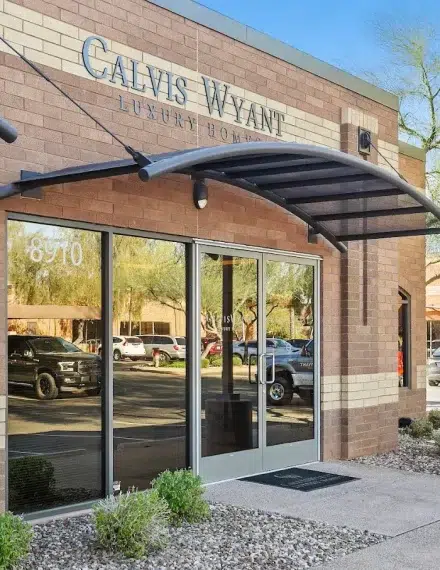
Calvis Wyant Podcast
Custom Home Interior Design: Details That Make It Yours, with Jeni Robison
- Published
- Runtime
- 53:29
About this episode
What makes a custom home feel like it was designed around you?
Jeni Robison of Dettaglio Interior Design joins Tony Calvis, Jr. to explore why interior design begins with the way a home works. She explains how plan assessments, furniture layouts, lifestyle conversations, and detailed drawings guide decisions before tile, cabinetry, countertops, and lighting are selected.
From kitchen storage and closet layouts to decision fatigue and field coordination, Jeni shares how her team connects individual choices to a cohesive home. They also discuss budgets, choosing an interior designer, and using trends selectively while keeping the homeowner’s personal style at the center.
Jump to a chapter
Select a timestamp to continue the conversation from that moment.
Episode transcript
Read the full conversation below. Select any timestamp to continue from that point in the video.
- 00:00 – I don’t think we should even start talking about the materials if the plan is not perfect. We need to delve in to the kitchen. Is the refrigerator in the exact right place? And we need to make sure we draw in furniture very early on, and that’s for space planning and no surprises. We get through the whole plan assessment. – For this episode, I’m interviewing Jeni Robison with Dettaglio Design, an interior design firm here in Scottsdale, Arizona. Jeni has an incredible client experience at her studio, which she’s managed to turn into more of an on-demand showroom for her clients.
- 00:30 We talk about the significance of the word Dettaglio in her work, the depth she and her team go through in each project, and how homeowners can move forward with confidence throughout the process. With that, please enjoy my conversation with Jeni Robison from Dettaglio Design. (gentle light music) Jeni, Jeni Robison? – Yes. – And not Jeni Dettaglio? – No. – Jeni Robison.
- 00:56 Welcome to the podcast. – Thank you. – So Dettaglio, you started the business in 2012. – Yes. – Right? What was the experience or niche that you were looking or setting out to fill for the space? – Well, when I set out to do it, I had already had 15 years experience with other firms and decided that it was time to go on my own because I love design so much. I thought where I could specialize would be really creating that team bond with the builder and the architect.
- 01:27 I think it can be a challenge for everyone to bring together a custom home and to make everything look seamless and perfect and to have the right communication and the specific details. So I though that I could probably stand out from some designers by providing this perfectly detailed binder, great communication, the teamwork, attitude, just to make the whole experience great for the client too.
- 01:54 – The name, Dettaglio. – Yes. – Italian for details. – That’s correct. – I had a hunch as to how that plays into the experience and you alluded to it, but, you know, how did you come up with that name? How do you use that name to influence your work and the client experience? – Yeah, I came up with that name somewhat early on because we were working on high-end designs with the firms I was with before.
- 02:19 And when it’s that high-end, there’s so many details to go into it. From the flooring material up to the ceiling details and into the little cabinet knobs and the edge details, the grout colors. And every client says, “I had no idea how many details go into this custom home project.” And so, it was very obvious that it’s all about the details. And then, that carries over into our documentation.
- 02:44 So we also say we try to get right down to that nitty-gritty, all the details and everything we’re handing over for the build so that the builder doesn’t have to call us every day and hunt us down for every answer. We’re not just handing over a design on a napkin. It’s everything is in drawing. It’s calling out every single spec. We’ve done it long enough now to know exactly what could be missing for information to where we put it all in.
- 03:09 – Yeah, and Calvis Wyant is very similar in that detail-oriented approach. You know, we find ourselves in our own bubble that we’re surprised when we don’t see that level of detail, right? Because it is so helpful- – Yes. – going into the build and making a experience that the homeowner will actually enjoy versus stressing about the entire way. But, yeah. – Yeah. – And if we’re talking about details, I do want to call out that this office embodies that idea perfectly.
- 03:39 I mean, you step in, and immediately you can feel, you know, the intentionality and the purpose behind the space and everything that you’re offering. What went into designing this office and coming up with the experience you wanted your clients to have as they stepped through the door? – Yeah, well, so the process first started… When I started my business, I was working in a very small little room in my house.
- 04:04 And then, I started to get employees and I decided it’s time to move out. But I hadn’t given it much thought at that point when I was moving out. So I moved into a small little other one room rental. So that would last about three years and we totally outgrew that space. So then, I started going around with a realtor looking for other places to rent. But the design mind, I just kept saying, “Oh, I could make this look so fabulous and I’d have grand ideas for a rental.”
- 04:32 I was going to remodel a place that was not mine. And so, I felt it was very important to find a place that I could purchase, remodel and call my own. So we started the new search and I will say I walked in and out of this place thinking, “No way, no way.” But I took a plan home with me that they had sitting there and I started thinking if I tear down all these walls and put up all new walls and I get rid of this purple wall here and this pink wall here.
- 05:01 And I mean, it was atrocious in here. It was set up as like a mortgage firm with cubbies and walls everywhere. So I took it all down and started over because what was good was the shell, the very tall ceilings in our library and workspace. But then, I saw this area as a great space for the conference room because it’s nice, bright, natural light, but lower, cozier ceilings in here. I mean still 12 foot, but lower than in there.
- 05:27 So I saw it as a shell once I could tear it all down. – No, you can tell that there’s a high value per square inch in this office and I think that that’s immediately apparent. But, you know, – Yeah. – your clients must feel incredibly comfortable walking in. Do you notice that they have, comfortability is the word or maybe just a strong sense of focus the moment they come in?
- 05:53 I mean, I feel like when I walk in, I’m sort of leaving the world behind and I’m just focused on Dettaglio, the project here. – Yeah, I think there’s a couple things that do that. We establish really close relationships with our clients. So I think they walk in thinking this is going to be very fun every meeting. I have some clients who I think just love coming to the meetings and hope to never be done with those. (chuckles) But we also have designed the office for efficiency because our clients are coming to us because they have busy lives.
- 06:22 They can’t go to every tile showroom in Scottsdale, and then visit every appliance place and plumbing and lighting. And again, all the details. They cannot visit all the showrooms for these details. So we’ve designed the space to store as many samples as possible. This doesn’t mean that we’re only going to show what’s here, but let’s say we’ll go pull decorative tile from a showroom, but then they say, “I like this decorative tile.” And we can easily say, “We know this really good field tile for the shower and it’s right back here and we can grab it.”
- 06:52 And we can pull it all together instead of saying, “Now let’s hop to the next showroom for the field tile and now over here for the liner.” So everything’s very efficient. We also have wood samples, cabinet door styles, paints, wallpapers, fabrics, countertops, flooring, so on and so on. And that’s so that we can just say, “Oh, I know just the thing. Let me go get it.” – Yeah. – And then bring it in and we can pull it all together very quickly. – Yeah, no, and you can’t see it from the video obviously, but you do have an extensive inventory of materials and things that your clients can feel and touch and, you know, this becomes your showroom, ready-made showroom every time, right?
- 07:31 – So. – Yes. – No, it’s all fantastic. So let’s say I sign up with Dettaglio for my project. – Yes, you should. – I will. But what does my first three to six months look like in terms of how you’re getting to understand my project and getting me to think about my own project in a way that will fit your process?
- 07:56 – Well, the first three to six months could be almost the entire design process from start to binder finalization where we submit. – Wow, okay. – We could get it done in as quick as three and I can tell you how that all works. But in about six months, we can have it submitted. Doesn’t mean we’re done. Now, the builder is reviewing it, asking us questions as they’re working on the bidding. And then, we go into construction and we have construction oversight.
- 08:21 But the first three to six months could be everything design-wise. – Wow, okay. – I say three because it could be three if the client is ready to go, week after week meetings, like “Let’s just get this done. We’re in a hurry.” Six months could be a more enjoyable, less stressful process. We usually ask for about 10 to 12 meetings from our clients and that is because most want to be involved in the process.
- 08:48 We love having them involved in the process. We want it to feel like their home, not our design per se, just what we would do with our home. So we want them to be involved in all the selections and the decisions. And if they are good with that, then we want 10 to 12 meetings. Every once in a while a client say, “Nope, too busy. You pull it together.” So the first meeting, I love to do plan assessment. I don’t think we should even start talking about the materials if the plan is not perfect.
- 09:13 And I work with a lot of amazing architects. It does not mean that it’s going to be perfect because we need to delve into the kitchen. Is the refrigerator in the exact right place and how does that work with your cooking style? And that could lead to moving an appliance or two, maybe even a wall, maybe shifting a window. And so, we like to perfect the plan. We need to make sure we draw in furniture very early on and that’s for space planning.
- 09:40 And maybe they’re like, “No, we want a big sectional,” and now we have to talk about how that’s going to fit in the room. No surprises if we get through the whole plan assessment. And then after that, that’s the first meeting. We go back to the architect. We work in CAD, so we’ll work on the revisions. We aren’t just going to say, “They don’t like it, fix it.” (chuckles) So we come up with the solution and send it to the architect. That’s that teamwork part too. And we’ll have solutions that we can work with the architect to make some of these adjustments.
- 10:09 That’s first meeting. Second meeting, we’re reviewing any of the revisions, but we’re starting to also look at the elevations. We draw elevations for anything that needs to show a design element. Maybe it’s a fireplace for an architectural detail, maybe it’s a kitchen hood, a backsplash in a bathroom or a shower surround. So usually, houses will have 60 to 120 elevations. And then, I will work into the third meeting real quick, but I won’t go through the whole process because it’s a lot.
- 10:37 But the third one, I love to do a discovery. So if our clients want to bring in any images they have, it could be from magazines, Pinterest, Houzz, anything that they have, we love that. But I also think clients are coming to us because they don’t have time to think about all that. And so, we will come with a lot of concept images. Usually, we already have a little bit of an idea. We’re looking at the architecture. We’ve talked with them and they’ve said we’re modern, we’re transitional, so on. So we’re going to show elements that we think are blending with what they’re saying, but we want to see if they gravitate toward a certain fireplace, kitchen hood, so on.
- 11:10 And that’s kind of a jump off for us to start working on these elevations before picking materials. – So you’ve made a mental shift in my head around the order of operations here, but I would’ve assumed that Pinterest board is the first thing they come with. Very proud, you know? – Yeah. – “Here’s my one Pinterest board with a thousand options. Please help dissect this for me or understand what I want.” But you’re saying that doesn’t come until the third meeting potentially.
- 11:37 – Or maybe never. – Or maybe never. – I would say maybe like 1 in 20 clients come with images. They’ll have an idea of what they like, but even that often changes. They could say I’m modern and all of a sudden we’re showing concept images and noticing that, no, they’re a little more soft modern, maybe transitional. – I see. – I’ve seen complete shifts in design. And I think it’s because they’re coming to us because they don’t know exactly what they want and they need that discovery time to do it.
- 12:06 But I will say with our streamlined process, we never end the design, you know, after the 12 meetings with them saying, “I’m still not sure what I want.” – Yeah. – Like, each phase is more discovery but very obvious. – So what are some of the early questions that you’re asking them to bring that out? You know, if we don’t have that visual reference to quickly pinpoint the things that they like, what are you asking them to start building that mental model of their home?
- 12:35 – Well, I want to know their design style, but I also want to know their lifestyle needs. So I’m going to learn if they have kids, if they like to cook, if cleaning is an okay thing or if they just want a very simple life, maybe there’s parents living with them. You know, so I try and learn as much as I can about the lifestyle, but really I’m not so much… I’m asking some questions, but I’m also showing pictures, reviewing the plan.
- 13:02 I’m learning so much from them, giving feedback. As much as they don’t come with Pinterest images, they come with so many strong thoughts on how they want their house to be. – And if you are doing this with a couple that are building their home together, how are you balancing both of their tastes, needs, preferences, et cetera, as you go through such a detail-oriented process?
- 13:28 – Yeah, I mean, I joke because… It depends on the client. Some are just amazingly in sync or so agreeable. You know, they’ll be like, “Oh, honey, I can tell you want this really badly so you get this or so on.” Then, you get some who are like, “It’s my turn to win.” (laughs) “You just got the last three decisions. It’s my turn.” So that’s when some of the psychology has to come into play. And I do have a psychology background, so that is where, you know, sometimes people don’t use their degrees. – We’re gonna get into it.
- 13:56 – But, yes, I do use my degree in that sense. And it’s more about saying why is this… If they’re disagreeing, “Why is this important to you? And then, why is this important that you…” You know, trying to feel both sides. And usually, you can come to an agreement. You know, they like a certain something in an image and then we’re starting to talk about it and it’s like, “You can still get this while the other person is happy too.” And if that doesn’t work out, we do the point system.
- 14:22 I’m just kidding. (laughs) – Yeah. – A point system or a Xanax, a prescription either way. – Yeah. Or it’s like, “You can’t come anymore.” No, I’m just kidding. (laughs) Just start counting points. – So I assume this comes naturally to you, but how are you building trust with these individuals, especially to be able to play that moderator- – Yeah. – for them as well?
- 14:50 – I understand that it is so important to build your custom dream home. And so, I’m not in this for sales. I don’t think they see any part of sales in me. I want to build a great relationship with them. I want to hear them and I want them to feel like they’re being heard. And I try to reflect that in everything that we’re designing. So I think I build their trust fairly early on because we’re not there for our own intentions.
- 15:18 We don’t have our certain style that we are pushing. And I think that, you know, first meeting, maybe they’re giving me their feelings and their thoughts. And they’ll see by second meeting, I’m reiterating what they told me in that meeting and I’m showing it in the designs. – I would assume that that’s very comforting to have someone else describe what’s in their head, right? – Yeah. – And that’s the magic of what we do, right? – Yeah.
- 15:43 – But I… – I think there’s a feeling that sometimes designers have their own agenda. And maybe there are some like that, and that we’re sometimes thinking about our portfolio or Instagram, but I think there’s a lot of designers out there, including us, that want a client to be happy. Even if it might not be my taste, might not make the magazine. The biggest compliment to me is a client who tells me five or 10 years later, “We still love our home.”
- 16:10 I want them to walk in and say, “I’m so happy.” – Yeah. – Not the rest of Instagram to love it. – Yeah. Is there a particular point or something you try to hit early where they say “Yes, Dettaglio is the firm I want to go with,” or build confidence in that decision? Even they may like you and everything, but is there something about the process that you find that they, you know, open their eyes, “Oh, I get it. This is what I want.”
- 16:36 – Well, you know, I think in the process, they’ve already jumped in with us. But in the interview, I’m able to show them the binder. I think sometimes that can overwhelm them, but I also let them know it’s fine. It’s a streamlined process and we get through it very easily, as hard as this can look. But they seem to be pretty impressed with all the details, the thickness of the binder.
- 17:01 And then, at least at that point they say, “We need a designer,” because they see what they’re going to do on their own if they don’t. And then, I hope that they decide I’m the designer and that could just be from the bonding during the meeting, could be in talking about the design fees and the budget hours. That could be part of it too. But hopefully, they just see it’s the whole package and that it’s going to be enjoyable.
- 17:26 – Yeah, and obviously, you know, we’ve talked about how we’re digitizing our businesses, but there is something about seeing that four-inch binder that just has all the thousands of decisions that they’ve made, that presentation. – Yes. – So, you know, that’s a part that a Word doc doesn’t necessarily capture, but yeah. – Yeah. – I know the new world is going digital and we are too.
- 17:53 But I also think there are some builders, I see the binders on site, so people love to have those to page through. The clients love to see this is the stack instead of just the digital platform. But at the same time, everything we produce hard copy goes digital too. So everybody can have whatever they want. – Yeah. – But I can’t say we’re saving paper because we’re still doing the hard copy. – Of course. – Other ways. – Is there any prep work that the clients have done that significantly improves their experience or the speed of the process?
- 18:27 – Sometimes, it’s not just like having to do homework, but just come knowing what you like and the decision makers are the ones that make it go quickly. I will give clients an estimate upfront of how long it will take to complete their project. And they can do it pretty accurately being that we’ve done enough, but where I always give a range and that bit of range is all dependent on how decisive the client is.
- 18:54 – Interesting. – Yeah. How much they already know coming into it, but whether they’re going to need to think through it over and over and over again. When we have gone over on my range, I’ve never had a client upset about it because I’m telling them early on, “You know, we’re a little slower at this than I thought. We can speed it up by doing these things.” But they realize it is maybe because they’ve asked me to draw their kitchen five different ways and continue to change it.
- 19:20 And that’s okay. I’m there for them. I want them to explore that. I’m okay with them looking into that as long as they’re okay with the extra time that’s involved with it. – Is there a certain order of decisions that you think that they should be focusing on first before others? Obviously, we can worry about the toilet paper holder till the end. But, you know, what are some of those major decisions you think they need to spend the time on and make the right decision on early?
- 19:46 – Well, early on the decisions are, it is helpful if you go looking through concepts. I mean, so much of the discovery is showing pictures. Not talking, not saying what’s your design style, but more saying, “Do you like this picture?” And they’re like, “Oh yes, I do.” And then it’s like, “Why do you like this picture? Is it the LED lighting? Is it the stone? The cabinet finish?” And so on. And so, that is huge. Just if they come with pictures or if they just come ready to see our pictures and tell us what they like and don’t like. But then with that, where I keep saying streamlined process, I find that there are certain things that are important to do first, second, third that make the decisions afterward easier.
- 20:21 So when we start getting into the materials, I start with tile. And I’ve designed this showroom for the tile too. I go to showrooms, tile showrooms, based on the budget and style of the client, and I grab a whole bunch of new things I think fit them. And I lay it all out here in addition to the shelves on both sides and they get to tell us what they like and dislike and we can pull it together. And then, after we know the tile, it’s really easy to say, “Well, with this tile scheme in this bathroom, this cabinet finish goes wonderfully.”
- 20:52 – Yes. – And now, we need this countertop. It might be a durable countertop or it might be a beautiful marble or, you know, that’s going to depend on the lifestyle that we’ve already discovered in that discovery part of it, but we can easily then pull the countertop. And after all of that, it’s easy to say, we can envision the whole room. Now, we know what light fixtures are going to go great in here. The finish, the scale, the type of light fixture. So then, we know plumbing and now we know hardware.
- 21:19 And that whole process, we’re going to show them options unless the client is the type that just wants us to say, “This is what we suggest.” And by then, we know exactly how our client likes to work. If there are the type that even if we show them the perfect thing, they still need to see 20 more to feel like it’s the perfect thing. But there’s other clients who are like, “Oh no, don’t show me all of this. Show me one or maybe three.” – Sure, yeah. – They’re great at telling me that too, but I can usually tell after a couple meetings. – Yeah, yeah.
- 21:47 – If I’m overwhelming them or underwhelming them with not showing them enough. – How are you handling that decision fatigue? I mean, are you pretty good at noticing when they’re starting to reach their limit in terms of number of decisions or number of options? – Yeah, we usually limit our meetings to one to two hours because I do start to see decision fatigue after that. Every once in a while, I have a client who would like to hang out with us for like five hours. And as long as they’re still having fun, let’s do it. (laughs) But I even start to get decision fatigue by then. – Yeah.
- 22:17 – But I think the one to two hours, I don’t see too much decision fatigue. Plus, I think we’re so open with the clients that they feel open with us and they can say, “I think I’m done today.” – Yeah, yeah. – Yeah. But you can see it. You can see them start to get overwhelmed, maybe not making the decisions as much. – When do you notice that they are moving from the ideation phase into understanding their personal style, starting to build that vocabulary of what they like and feeling confidence in developing something that’s unique to them- – Yeah. – and the right fit for their lifestyle?
- 22:51 – I think every client’s different that way too, because the interview, they might just know exactly what they want. But I think by the time on that third meeting, when we’re going over the concept images, I start to feel more confident in their designs and I think they do too. But where I see the biggest excitement is when we start to get into materials. So the tile meeting, there’s two things to that. I think they might leave feeling overwhelmed because they just designed a whole lot of things, which is why our next meeting is the follow-up review of everything they picked.
- 23:18 But they always seem to leave very excited about how much they did and what their house is going to come to look like after that. – So you mentioned before, and I know a little bit about your early roots, but you initially saw psychology as a career. – Yeah. – And took a hard left into interior design instead. Most would say, okay, that’s quite a big gap in between, but I think you probably find a lot more similarity in the two than what the outside might.
- 23:51 Can you explain how psychology has influenced what you’ve brought into interior design? – Yeah, I think I use it probably every day, but not to say I’m a psychologist. I think psychology is a great degree where you can use it in a lot of jobs, but I use it in communicating with my clients and listening to them because I think we specialize in listening to our clients, giving them the home that they want. So I’m listening to them. I may be handling some issues or concerns.
- 24:18 But most of all, like, when you see a challenge, whether it’s with a builder, an architect, a client, I’m thinking, what’s their perspective? Like, nobody is crazy. There’s a reason that they are addressing it this way, and I need to think about what they are going through right now while they’re thinking this. And I’ve just always been able to come to a resolution. It’s never an argument or a bad result because I can see people’s positions.
- 24:48 I never really think that they have an issue. I will say there’s sometimes where like, “Man, why can’t they just decide? You know, it’s so easy.” And they’re like, “No, if it was my house, this is important stuff.” – Yeah. – And if this is my house, and it’s a lot of money. It’s a lot of money. And you have to think it through and you can change your mind. You’re entitled to that. – Yeah. – I get everything that they’re doing.
- 25:14 – Yeah. – I also get builders. It is a tough job and they are keeping everybody together and they have to run this perfect situation. And if one person’s off, now the timeline’s off, they also get the brunt of anything that goes wrong and have to address it- – Of course. – with the client. So I fully understand all the frustrations, which why I try to make it as easy as possible for them. And in the long run, that makes it better for the client too.
- 25:41 – Yeah, well, speaking as a builder, thank you for your service there. – Yeah, yes. – And speaking of your own home, it was your college roommates who noticed that you were particular about how your dorm was set up. – Yes. – And so, they knew that you were an interior designer before you did. – Yes, I was in college in Iowa, and so there really isn’t much of a career in Iowa.
- 26:10 And so, even though my dorm room looked great, and then later I had a house for the last few years and I decorated that. When I think of it now, it was not great, but everybody thought it was great. But I was like, “I have a degree. I am not going to be a decorator,” because that’s a perspective, you know, in small town Iowa where you probably are just going to design farmhouses, which I laugh now because modern farm was very popular for a while. – Oh, of course, yeah.
- 26:37 – Yeah, so I’m like, “I’m still designing farmhouses.” So I actually didn’t even pick to go this route until I came to ASU for my clinical psychology degree. But by then, I had done an internship for a year, my senior year in college and decided maybe psychology isn’t for me. As much as I love the study of psychology, I don’t love the counseling aspect. And I think I was young and thought that I could fix everyone’s problems, and then realized, “No, my career would probably be just hearing a lot of problems.”
- 27:07 (Jeni laughs) So then I decided not to go the clinical psychology route and I work for an architect because I though maybe I want to go the architecture route. And with that architect came all kinds of professional interior designers in the door and they were very respectable. And I just started to think… You know, I would sit in those meetings and talk architecture, which I love, but I loved taking it to the finished part and that was with the designer.
- 27:36 I was so into what they were sharing. And so, I looked into getting another degree. And so, I got my degree in interior design after that. – Wow. – Yeah, yeah. It’s been a little bit of a road, but it’s been fun. – A little bit. – Yeah. – But before starting Dettaglio, you worked for a number of established valley firms. – Yeah. – Est Est being among them. – Yeah. – Which we’ve had Blake on the podcast. – Yes, they were awesome to work for.
- 28:04 – Yeah, what were you learning from those experiences that you wanted to bring into Dettaglio eventually? – I think the three firms that I worked for, I got lucky because I learned different avenues of design and business. I don’t think you can ever know what you’re going into, so I think I just got lucky with this. But I learned what I felt was good business practice, and then not so good business practice.
- 28:30 So I learned both of those sides. I also worked for a big firm, which just… I joke like I was drinking from a fire hose because I just learned so much, which at the time a little stressful, but certainly taught me a lot. I also worked for a smaller firm where I could learn the business side a little bit more because when you’re with a big firm, you’re just designing. But smaller firm, I got to learn how she was doing business and how she was thinking through staying in business.
- 28:59 – Yeah. – So yeah, it was all very helpful. – I have a note in my notes here that says you inventoried a client’s wardrobe while designing their closet. Did I get this story right? – All the time. – Okay. – Yeah, you must… Yeah, you found this. – You take a full inventory of- – Yeah. And that’s not just closets. – Right, not just closets. – Yeah. – But at least just from the number of skews that would exist in a wardrobe, right?
- 29:25 – Oh, yeah. – First off, that speaks to the Dettaglio namesake. – Yeah. – But the implication here is how deeply personal the process is. – Yeah, yeah, yeah. – Right? How do you build that level of trust and understanding with your clients that you can do full inventories of their entire life, and then build something perfectly suited to them?
- 29:52 – Yeah, well, I’ve admired some of their wardrobes. That’s been fun. But I think that a house, if you’re going to customize this house for yourself, it needs to be perfect. You don’t want to walk into your closet and say, “I don’t have enough shelves for my shoes.” So I don’t inventory in the sense that I’m like, “Oh, that’s Prada and that’s Gucci,” like that. But I’m like, you need 20 linear feet of double hang and you need 10 linear feet of full hang and so on and so on.
- 30:19 And I take that approach in closets, but I also take it in all the custom cabinetry. Like, kitchens is huge. First, we get the plan going. Then, we have our blocked-out elevation. And before we even start to talk about materials, we say, how do you cook in this space? Where are the pots and pans, the cooking utensils, the measuring cups, flour and the sugar, so on. And now, we go over to your dishwashing and where are you going to put your dishes and your silverware and so on.
- 30:48 So every single door and drawer is accounted for. So I’m not going to just say, drawers all over the base and doors all over the uppers or so on. I have an accessory in them and I’m designing that door or drawer for what they’re going to use it for. – Yeah, I mean, as we’ve been talking, it seems like you have built in so many efficiencies into your business. I mean, was this an intentional effort to make this as smooth and quick a process for the homeowners?
- 31:17 – Yeah, I want that to be a huge part of it. I think there’s a lot of benefits to hiring an interior designer, but a huge one is having someone who’s done it a lot to know exactly what can go wrong and will go wrong and to know what the builder will be asking them daily if they don’t have it documented. And so, I think I’ve done it enough now to know what will be asked so that I ask it upfront in those six months and it’s all in the binder.
- 31:46 Every drawing will say pots and pans and ladles and so on. Cabinet companies have told us how much they love our drawings because they don’t have to sit down and design with the client. And I think that they feel like we are pretty correct in our designs too. I never see them redesign them. And so, all that’s pretty much done for them. – Yeah. – And the builder then knows when they get the bids back, it’s not a pretend bid.
- 32:11 It’s not like- – Right. – now the cabinet company will sit down and actually design it. It’s done. – Yeah, yeah. I guess there’s so many details that… and we keep coming back to that word, but what’s your sensitivity to the level of depth that you go to where you’re not overanalyzing and you’re still making progress, but you’re still giving the right amount of attention to the everyday little things that the client is going to notice in their home?
- 32:41 – Yeah, I mean, overanalyzing, I feel like it’s our duty to analyze in full. So I mean, we do get right down to some of the last meetings or talking about the LED locations at toe kicks, under cabinets, above cabinets and ceilings. We talk about the patio heaters, misters, the EV chargers, roller shades, pockets motorization.
- 33:12 I mean, it’s all important because if it’s not talked about now, it’s going to be talked about last minute on the job site or maybe too late. So we’re constantly evolving. I don’t think I talked about roller shades and pockets and so on or EV 10 years ago. But as we’re learning, like as we’re having these emergency meetings for things, I’m like, “This now has to get added to our discussion going forward.” And we do have a punch list before we submit the binder. Did we get through all of these things?
- 33:37 I do feel like the last couple meetings are very miscellaneous, very random questions, and clients might be like, “Oh, there’s so many questions,” but they probably appreciate them now versus later. – Yeah, yeah. What are you starting to notice clients ask for or perhaps other things coming in that you hadn’t heard about 10 years ago? I mean, obviously there are the automated roller shades, but anything else that might signal where people are going in terms of what they expect their home to accomplish for them?
- 34:08 – Hmm, I mean, some of these are more… They’ve been over the years, it’s been a lot more, but I’m seeing a lot. It’s very important to have the butler pantry, the mud room. I’m seeing a little less of the theater and more of the comfortable den. Like, they still want that separate space since the great open floor plan is your great room with your kitchen, but they want that other cozy spot.
- 34:33 I don’t know, what else can I say? We’re doing a lot of specialized rooms. We’ve done the bowling alley, the pool inside, the golf simulator. We do a lot of those. Wine rooms, gun range, and some fun ones. Oh, a speakeasy, we’re doing that right now and we just finished a karaoke room. So I love these fun playful rooms too. – Yeah. – Yeah. So, you know, I’m seeing some of these specific rooms.
- 34:58 Other than that, you know, definitely seeing a lot of the AV being an important talk early on- – Yeah. – to incorporate everything in the AV, but yeah. – Are there any particularly small choices that you feel asymmetrically improve the homeowner experience drastically? So a seemingly minute decision that actually makes a significant difference in how they live.
- 35:26 – Going back to the cabinetry storage, I mean, they never think to talk about how they’re going to be using the kitchen because they just plan to move in and put their things in and hope it works. So I think they always feel that that is a tedious meeting, but also so important. – Yeah. – They leave that feeling like we would’ve never had this meeting we thought, but… – Right. And they get to have it with you as opposed to having it with the cabinet maker who they haven’t been working with this entire time.
- 35:54 – Yes, yes, yes. – So yeah, I can see tremendous benefit in that. But help me understand how you keep the big picture in mind as you’re doing these very focused decisions or the process of doing the interior design for them. – The big picture in mind comes within those first few discovery times. But then when we know their design style, it will depend on the client.
- 36:22 Some are so consistent that everything they’re picking is so obvious in a sense. Like, you know that it’s going to go great with the house. Every once in awhile, there’s a client who just loves all design styles and that’s important to make it cohesive. So that’s where I have to definitely guide and say, “This goes better than this.” We also aren’t going to show them things that we think are going to throw them off because we, you know, streamline the options to show them.
- 36:48 But we try to get that vision within the first few meetings so that we’re going to keep guiding them that way. And it’s okay if a client likes a lot of different styles. That just makes our job all that much more important to make it come together well and make it look cohesive. – You obviously keep a very tight integration with the builder and architect as you’re doing this, but how are you allowing for other creative collaborations amongst these groups, but still keeping that design intent intact?
- 37:20 – Do you mean like how do I make sure I can work with them again in projects or? – Well, you’ve built out their interior design package. – Yeah. – You’ve got the big binder. How do you also remain flexible with the builder and the architect as we break ground and start to have to make a few decisions in the field that perhaps weren’t accounted for? Obviously, we want to try and minimize those. – Yes. – But what are you doing to facilitate creativity without losing the original intent of the house built on paper?
- 37:51 – That is something where I do think we stand out actually, because I’m not the type of designer that’s going to go and say, “This is my design, you’re doing it wrong. You need to fix it, bye.” And then, I’m going to go tell the client you’re doing it wrong too. It’s pretty much the opposite of that. I know, like, as a designer, first, I want to take my experience so that I design something that can be carried out. But every once in a while, there is going to be an issue. And so I want to learn what the issue is, what’s causing the issue and how we can fix it.
- 38:20 And I think if you have a good relationship with the builder or the architect or I mean, with both, you talk about the best way to resolve it. It’s never a good scenario when you do go to the client and say, “We have an issue and it’s his fault.” It’s more we figure out the issue together, then I go to the client, “We have an issue and we’ve fixed it. We’ve resolved it.” Sometimes, I won’t even tell the client until we have the solution and it’s not a dishonesty.
- 38:45 It’s to make their experience more pleasurable. They don’t have to hear the blame game. They don’t need to know whose fault it is. They don’t even want to know it’s an issue. They just want to know it’s resolved. – Right. – And if you can resolve it without anything changing, you don’t have to tell them there’s an issue. But if there’s some adjustments, just tell them what we’re changing and this is why. – Yeah, and I would imagine every single one of them appreciates that advocacy- – Yes. – on their side since they’re not doing this as their day job.
- 39:15 – Yes, yes, yes. And it’s a custom build. There will be issues. A perfect builder, there will be issues. And it might even be because maybe the architect didn’t show a detail or the designer maybe did something wrong. It’s just never going to be perfect when it’s custom. And so, we’ll run into the issues, but it’s just how we fix them. – So it is a custom build. I mean, these houses truly are art pieces, right? – Yes.
- 39:40 – And art is never perfect. How are you setting those expectations early on that, you know, it will be perfect on paper, but the fact that it’s not perfect in reality is what makes it so beautiful? Is there anything that you do to help your clients leave that flexibility for the expression of the home when it’s actually built? – Yeah, I feel like there’s a little bit of discussion along the way. Like, we can try this and we’ll work with the builder if there’s something where I think it could be a challenge, but also just little comments like we’re going to be there during construction and we’re going to be walking the site and addressing any concerns if the builder calls us to come on site.
- 40:17 So hopefully, the client will know when it’s custom. Like, you’re not getting that tracked home that the neighbors look the same because, yeah, they’ve got it down to a science. But this is your special home and there will be things that need to be addressed. So I do let them know along the way in the design part, but also when we get into furniture, I tell them on install day. I don’t think I’ve ever had a perfect install, I’m just going to admit, but I tell them on install day, it is not going to go perfectly.
- 40:44 In fact, it’s probably better if you’re not there. But in the end, it will be perfect. There’s inevitably some issue. The shipping damage, the installers bump something. Like, there’s always something. And so my furniture phase, it’s a lot like the builder’s construction phase. There are always issues and the more the client is on site picking out day by day the issues, it’s like, yes, there’s issues, but we’re going to fix them.
- 41:10 So it’s much better if they just come at the end. – So is install day a fun day or a hectic day for you? It’s not a fun day, yeah. – Not a fun day. – I think I was telling you, my first interview, they sat me down on install day and they’re like, “What do you love most about install day?” And I’m like, “I can’t think of a single thing that I love about install day.” But I actually, I mean, there’s so much hecticness, but at the end of the day, I actually love it.
- 41:36 I love looking at all the rooms that are finished and saying, “This came together great,” because usually it’s a two to three-year process if we really are starting at architecture and going all the way to furniture, window treatments, accessories. But if we get to do the entire process with them, it turns out so good and I love seeing it. And, you know, I’ve had people ask, “How do you feel when your clients see the big reveal?” And I’m like, “There’s never a big reveal like HGTV.”
- 42:02 Like, they’re seeing it throughout the process and they’re picking things with us and they’re visiting their house. There’s never a big reveal, but that day that we’re doing the install, I just love when they come in and they see everything. And then, I love even more when it’s years to come that they’re still like, “We love our home.” – Right, right. Yeah, I would assume that that first week and five years later, the feeling of finally reaching that completion point and being able to live in it, plus after five years, realizing we did a really good job because we’ve loved it the whole way through.
- 42:37 – We still love it, yes. – Yeah. – And we try to design a timeless home, but we also try to design something that has all of their personal touches. It’s not a model home. It’s not speaking to my particular design style. It is their personal touches that we get from all of those meetings and it’s their home. – Would that be your way of deflecting going too trendy is to push them more into their personal style as opposed to while still keeping the timeless nature.
- 43:04 But yeah, I didn’t ask about that, but how do you combat trendiness versus timeliness? – Well, as much as our clients are on Pinterest, we are probably on it 10 times more. So if I am seeing the same thing on Pinterest over and over and over again, I’m getting sick of it already. So I know that the general public will be sick of it soon after. And so as we’re designing and they’re saying, let’s use the example, waterfall kitchen island, I try to just…
- 43:34 If they love it, we’re going to do it, but I just want to let them know that that could be an outdated thing. Maybe certain cabinet finishes, maybe certain features, and then maybe there’s a different play on it. We’ve done waterfall kitchen islands that have a groove detail in them or a little bit of a wood element mixed in with it. So a play that makes it different or if they’re loving fluting, well, maybe we aren’t going to do it in 10 places in your house, but let’s just pick one in case you’re sick of it sometime.
- 44:03 I love wood fluting, but it’s going to go. (chuckles) – So for someone beginning a custom home or a major remodel, what are some of the early questions you hope they ask themselves before they come to you? – Budget, yes. – Budget, yes. Very important. – Style. And how they see the process going, whether they want to be highly involved or just need someone to take over it and do it. So talking about budget and working with the builder too, I never want to be that designer that is just blowing it way over the budget because I just did whatever I want and showed the client the most amazing things they could possibly have.
- 44:42 So I don’t want to make them so excited about a design that they’re not going to get, and I definitely want to see the house built. So I do want to start very early on talking about budget, and that’s not right down to the specifics. But first, I want to pick things that fit the place that they’re building their home. So I am going to pick different things if it’s Chandler versus Paradise Valley.
- 45:08 I don’t want to go, like, the most expensive thing in Chandler, and the same as I don’t want to degrade for Paradise Valley. And there’s nothing wrong with that. I do a lot of houses in Chandler, and they can look fabulous, but I just want to put the right things in for the right budget. And really in Chandler, you don’t want to go building a house that’s 1,500 square foot or you’re overdoing it. PV, that’s probably more like where we’re going.
- 45:33 So I start with the area. But then if I hear what a builder has said for a price per square foot, that will tell me, “Oh, it’s a little more on the low end and I need to watch that.” Or “It’s on the high end, let’s have fun.” If they want to break it down per category, you know? 50,000 lighting budgets, so on and so on, that’ll tell me a little bit, but more it’s the big picture of what I think it should be in the area compared to what the builder has said to know what I can do.
- 46:01 – Yeah, is there anything the homeowner can do to start to feel out what budget their tastes will best match as well as support? – Yeah, there’s different ways of going about that. They might have their own comfort level, and I do want to talk about that early on because if it’s too low, I feel terrible if we’re going to spend a lot of time in the whole design process, not just me, but the architects, the builders, and it just was too low to begin with. So it’s not my place to give specific numbers, that’s more for the builder.
- 46:30 I don’t want to, you know, stand past my boundaries of like, “No, the builder’s telling you wrong,” or anything like that. But I will have a talk with the builder, like, “Is this really where it has to be?” And, you know, if I’m worried about that. So I do want to talk with them early on, and it could be their comfort level that they got, or it could be because they talked to a bunch of builders and this is what they have for a number, or it could be because they looked at what the value of their house will be in that neighborhood when it’s completed and we can go off of that.
- 46:59 So I do try and gather all that to know, and if I’m really concerned about it, I’ll talk. – Yeah, so budget, what else might trigger someone to realize, at least before they come to the realization of, “I need an interior designer,” what else are they thinking about or what other pain points do they have that you think they should recognize in themselves to say, “Ah, it’s time to involve the interior designer in that project”?
- 47:27 – Well, time to involve us if they’re not sure of their style or how to pull it together. But truly, I think if it’s a house that’s more than 4 or 5,000 square feet, I should say 4,000 square feet, you’re going to get into a lot of details and it’s going to be a much smoother process of the designer. And I think we are well worth the money, high value.
- 47:52 Not only can we save money, like it might be- – Right. – That you’re saving from us. We know the products, we know what they cost, we know how to give you your best bang for your buck. We’re even going to guide you, like “You just picked an expensive material, let’s use it sparingly in a shower niche or something.” So we’re going to guide you along the way. We’re going to save you money. We’re going to save you tons of time, so many headaches that can come from not knowing what you’re doing. And it’s just a more pleasant experience with the builder.
- 48:17 It’s not the builder’s job to say, “Have you picked your countertops yet? Did you finish your cabinetry?” There’s no need for you to do that. And so as soon as it becomes a custom home, around that 4,000 square feet or more, you need a designer. But there are some designers where it’s like flat fee packages, some are hourly. Some you can decide how much you want to use them too. – Are there any questions that you think the homeowners should have when they’re evaluating interior designers that will help to suss out if it’s the right fit for their project?
- 48:52 – It’s important to know if they have a specific design style. There are a lot of interior designs that have a specific design style, and that is an amazing business approach too. I mean, it’s great for marketing. People are going to follow them on Instagram and just admire their design style. And so, some clients might go to them because they’re like, “I just want to tell them just do that again. I love it.” Other clients might say, “We need you to be flexible with our design style and we need you to help us learn our design style too.”
- 49:22 So you want to learn what kind of designer is going to have their type of style versus a variety of styles. You also want to learn the process, how experienced they are in, like, the architecture and the rendering side of it too. Some of the less expensive designers or less experienced designers might just do a quick rendering, like, “Here it is.”
- 49:47 And they aren’t saying, “Here’s the layout for the tile, and here’s the grout and here’s the liner, and here’s how we’re going to terminate it.” There’s so many details that have to go into it and you need a designer that’s going to give all that. I also think they need to feel out the personality. – Of course. – You know? I’m not going to get every one of them, and I think that they have to feel like they get along great with the designer because it is a very personal process that, like I said, could be two to three years.
- 50:12 – Right, next year, 15 years? – Yes, yes. – For Dettaglio? – What does the next 15 look like? – Oh, wow. So I can sound a bit unmotivated when I say this, but I want it to look exactly like it looks like now. That sounds so bad. – No, no, that’s fantastic. – That sounds so bad. I guess I’m in a happy place. And when I thought I would start Dettaglio, I didn’t envision a big company. I just love to design.
- 50:38 And then I got busy enough, I’m like, “I need help, so let’s hire someone but I’m only going to hire one.” And then I was like, “We need help. We’re only going to hire one more.” And we just kept hiring until I said, “This isn’t working because I’m not designing anymore.” I’m a manager and I know my skills. I am a better designer than I am manager, and I don’t want the quality to go down. Plus, I just found that all my clients were saying, “Well, why don’t we get to work with you?
- 51:05 Why are we with so-and-so? We hired you.” I think some designers do that very well. Maybe they just have amazing crew or have some great way of saying, “I’m going to hand you off now.” But I just found the more employees I had, the busier I was because I was in every single meeting with these clients. So we are a boutique interior design firm. It’s just the four of us. I am with every project. I also have Morgan, who is my partner, who’s been with me for eight years.
- 51:34 I brought her on, so I was like, “You cannot leave me. I’m going to make sure you don’t leave.” So that’s super helpful too, to have experienced designers on your team. They’re all lead designers because they all come with a lot of experience, and that’s what works best for me. – Well, it sounds very balanced as a team and as a process and experience for the client especially. – Yeah. I’m happy with that part. I love my clients.
- 51:59 I love my projects. Every designer’s going to say, we’d love bigger and bigger and better and higher budgets, but this is what I pictured, and I’m happy with it. I do have great high-end clients and work with great high-end builders, yeah. – That’s amazing. – I’m happy. – That’s great. – Yeah. – Well, Jeni, this has been wonderful. Where can people find you? Where do you recommend that they start with learning about Dettaglio and everything that you’re doing?
- 52:30 – Well, they can go to dettagliodesign.com and that shows our portfolio. We like to show a wide range of design styles so they can see that we are listening and giving every client their custom home. It also talks about our team, our studio, our process. So you can go there. And then, of course, you can see the daily updates on our Instagram, dettagliodesign is our handle. And I like Instagram so that I can be showing what we’re doing daily.
- 52:58 I’m not as good as some at that. I do not walk into a meeting thinking, “I’m going to put this on Instagram.” So I get back at the day, I’m like, “Oh, I didn’t do anything, anything for Instagram.” But we still have it pretty well updated. – Well, there’s plenty of Instagram content from this to come and- – Good, we’re good. – Yeah, thank you so much. This has been wonderful. – Thank you. I really appreciate the time and yeah. – It’s been fun.
- 53:23 (light upbeat music)
Discuss your vision with an experienced builder.
Whether you already own a homesite or are still exploring Arizona’s luxury communities, our integrated team can help you consider the land, the design, and the build as one connected journey. We begin by listening to how you want to live.