Facebook
Back to all episodes

Calvis Wyant Podcast

Interior Design Decisions That Lead to the Best Build – With Jessica Jensen

Published
Runtime
48:37
Listen

About this episode

What should you bring to your first meeting with an interior designer, and how do you know the design is moving in the right direction?

Jessica Jensen, owner of Stylescape Studio, joins Tony Calvis, Jr. to walk through the decisions behind a custom home’s interior. They discuss starting with a budget, timeline, and visual references; designing around daily life; pacing selections to reduce decision fatigue; documenting choices for construction; and bringing the designer, architect, and builder together early. Jessica also explains how floor plans become elevations and 3D renderings, where AI helps—and where it still falls short—and how to use trends without dating a home’s biggest decisions.

Jump to a chapter

Select a timestamp to continue the conversation from that moment.

Episode transcript

Read the full conversation below. Select any timestamp to continue from that point in the video.

  1. 00:00 A lot of these AIs are not smart enough to think about scale proportion, codes, and other things. So, it's a great tool, but it's not taking away all of that work that we did to get to that point. For this episode, I'm interviewing Jessica Jensen at her interior design firm, Stylescape Studio. Jessica brings incredible discipline and style into her work with clients, and we talk about what it looks like to guide homeowners through their interior design process, from start to finish. We get into the importance
  2. 00:30 of bringing the right team together early, how she helps clients build confidence around their decisions, and why a great interior has to work just as well as it looks. With that, please enjoy my conversation with Jessica Jensen from Stylescape Studio. Jessica, thank you so much for doing this. Absolutely. – It's exciting to be here. So, tell me about Stylescape Studio. Residential, mostly interior design firm, but boutique commercial when it fits.
  3. 01:01 Definitely in the luxury market. We pride ourself on precision and documentation. We wanna be the best teammates for our trade partners, our contractors, our architects, so that your project goes as smooth as possible. And that way, what we actually select gets built and to the finished product. Nice. And how did you come up with the name Stylescape? Well, I had an inquiry for a project because it started as a side project, and I had an inquiry, and I hadn't created my LLC yet,
  4. 01:33 and I hadn't named the business yet. And I am terrible at naming things. I didn't even name our dogs or our child. And so, I went online and I Googled, and this is before AI, so I Googled, like, naming businesses, and this business came up, and you could pay them $250, and they'd give you 10 different names. And I paid the $250, and I picked from the one of 10 names, and I was like, "That's good enough for now." And then, I haven't changed it since. I don't think you expected me to ask that question. No, actually, I thought about it this morning.
  5. 02:03 I was like, "I wonder if he's gonna ask me." And I was like, "Should I be honest?" I'm like, "Yeah, it's pretty funny." And I was, like, so broke at the time, so $250 was a lot. – [Tony] Sure. Sure. And so, I didn't wanna do it again. And so, I was like, "I'm just gonna pick this," and it stuck. And I'm like, "Yeah, it's nice. Am I in love with it? No. But is it good for now? Yeah." That's great. Well, the office, we're here at the office. [Jessica] Yes. – The beautiful space. Yes. Before we started filming, you shared a quick story
  6. 02:33 that perhaps was a little bit more intentional in why you chose this place. Do you wanna talk about that- – Sure. And why you chose the office that we're in? So, I was looking at offices to rent, and I toured a bunch of different places around the Valley. And when I walked into this space, I could just tell by the look and the feel that they had interior designers on staff. And when I talked to them, they clearly said that they had in-house interior designers.
  7. 03:04 And you can really tell by the attention to detail, the level of finishes, and the thought and the care that was put in the space. And I thought that was the best reflection of my studio. Yeah, and that's what you want your clients walking into immediately, just setting the tone and the ambience of what they should be experiencing, right? Yeah, it's all about a curated experience when you walk in. Like, designers are doing beautiful spaces, but we're also using psychology and other things to make you feel a certain way.
  8. 03:34 So, when I bring clients in, I want them to feel a certain way. I want them to feel comfortable and confident with every decision that we're making. And if I can't put my own space together or myself together, then how am I gonna put your space together? Of course. Yeah. Before we get in too far into the client experience, let's talk about your background. So, I know pieces of the story, but how did you get into this? Where did you go to school? What was the career path before you got to Stylescape? So, born in Albuquerque, New Mexico,
  9. 04:06 but raised in Calgary, Canada. Went to a really small high school. I graduated with, like, 30 students. [Tony] Oh, wow. So, like, guidance counselors didn't really say that interior design or architecture or anything was an option for me. So, I didn't know what I wanted to do coming out of graduation. So, I just went to, like, a local college, and I played volleyball, and I kind of tried to figure it out. And there just became a breaking point where I was like, "Okay, I really need to figure out what I want to do with the rest of my life." And I had started researching, like, architecture,
  10. 04:39 interior design, and my parents had bought property down in Arizona, so that kind of made ASU an option. And then, I started looking into their program, and I was like, "Oh, this is a really interesting program. It's really intense." I talked to the guidance counselor, and then I just decided to transfer from there. So, went through, did more four years of schooling because ASU only accepts 30 students into their Interior Design program,
  11. 05:09 or at least that's how it used to be. And so it was gonna be four years, no matter what. So, I knew if I was gonna make this decision, like I had to stick with it. So, I did my four years, got an internship after, and became a full-time designer at a firm here, stayed for seven years. Then, I got married. I had a baby, and I didn't wanna work for someone else anymore. And so, I had already kind of started taking on some side projects and thinking about it,
  12. 05:40 but having a baby just kind of pushed me into starting my own firm. And so, that's how Stylescape was born. Well, you may be one of the seemingly few people I know that actually got a degree in the field that they ended up working in. Yes, but I took my time getting there. I did seven years of schooling before I finished my degree. So, I took a long time. I wasn't full-time, so I was working while I was in the program. But, yeah, I am one of the few that actually used their degree.
  13. 06:10 So, were you always pretty artistic and brought a creative or just had a creative eye for things, or did you really fall in love with it at ASU once you joined their program? So, I was a little bit around it. My mom definitely loved interior design, so I was a little exposed to it. I was a very creative kid. I wasn't the most artistic, I would say. I can draw, but there were people that were drawing realistic faces no problem, and I really had to work at it. I had already liked interior design,
  14. 06:41 but I didn't know you could do that as a career. Like, again, it's really small school. I had no idea. And then, when I went to ASU, I got to learn more about the science and the construction, and I just fell more and more in love with it because I really do enjoy the construction aspect of what we do, as well as, like, the psychology and everything else that comes together. It's just a really beautiful career because it balances the right brain and the left brain, which is, like, creative and precision. And that's what I love about it.
  15. 07:11 Yeah, and did you always know that, eventually, something like Studioscape would be the ultimate goal, or have you had that entrepreneurial mindset from the beginning? No, I don't think so. I think it found me later in life. My dad is an entrepreneur, but I just think, again, I felt like, I think I was a little… I'm a little bit of a late bloomer, so I didn't know. And then I just went into it, and then I worked for somebody else, and that was going really well. And then, I kind of…
  16. 07:42 There was like a breaking point where it was just like I was at a certain level, and the firm that I worked for before, I wanted to pursue more luxury projects, bigger budgets, bigger houses, and they were just kind of happy where they were at. And so, I kind of hit this breaking point again, where I'm like, "Okay, well, do I wanna keep doing this, or do I wanna pursue the projects I really want and try it a little… This is gonna be harder, but more rewarding." And that's what I ended up doing.
  17. 08:13 Yeah, when I look at your background, I mean, there's obviously this theme of constant growth across your whole history, but with Stylescape, what were you bringing into the firm that you wanted different? Obviously, you wanted to do more, you wanted to take on bigger projects, but what else did you want Stylescape differentiated with? Systems, processes, precision. I wanna eliminate gray area from what we do, so that we're not such a headache on a job site,
  18. 08:44 because I feel like in the past, interior designers have gotten a really bad rap for just changing things at the last minute, or I'll just decide in the field, and that's not fun for anybody. And so I wanted to set us apart from anybody else and make sure that we are documenting as much as we can. Now, we are imperfect people trying to make a perfect product. So, there's gonna be mistakes in the field, but let's try and mitigate as many as we can in the process and the planning. And let's take the time to plan,
  19. 09:15 so that everybody is supported and that the process is just better for not only our trade partners, but for the client as well. Yeah, and then on the other side of the coin, what are you trying to preserve about what you've learned with interior design and the principles, anything? I mean, they taught me everything I needed to know. Like, school only taught me so much. They taught me the basics. They taught me how to draw a floor plan. They taught me some codes and that kind of thing, but they didn't teach me how cabinets are constructed or anything like that.
  20. 09:45 So, my mentors at the firm really taught me the skills that I can then take into my own firm and teach other people to use. Yeah. Yeah, so something that stood out to me about your work is just how well you guide the clients through the process. So, when they first come in, how are you getting them into that system or that process, and guiding them through, so that they immediately build trust
  21. 10:16 or know that this is the right place for them to work with an interior designer? Oh, we start slow. – [Tony] Start slow. Okay. Yeah, I mean, you're basically buying a friend for the next year or so. That's how I look at it. So, you need to like me, you need to trust me. And I definitely have a system and a way of doing things, and it has a proven track record. So, we start really slow, spoonfeeding. So, we start with an overall concept and design, and that's usually based off of a Pinterest board
  22. 10:47 that the client gives, so that we have some type of direction that we're going in. And we start just kind of putting the puzzle together piece by piece, little by little, until they can clearly see their vision. And usually, I can tell there's a breaking point once we go meeting after meeting, where the client eventually trusts me. Sometimes, it takes longer than others, but there's where they kind of give into the process, and they're like, "Oh, okay, we know this is gonna look really good, and we feel confident making those decisions."
  23. 11:18 And that's what I want for my clients. I want them to feel 100% confident in every decision that they make. Yeah, because they're not only trusting you and buying that friend, but they're gonna have to live with the decisions that you and them create or decide on for many years after that. Well, and I hope they love it for many years. – [Tony] Right. And so, what works for one client won't work for another client. And so, I want longevity in the design as well. And so, we have to think about a lot of different things
  24. 11:48 in order to achieve that. So, let's take some time to think about or to talk about that longevity because when they design something with you, yes, looks perfect on day one, but then how does the interior design grow with them and their lifestyle over the years? Yeah, so that's gonna be different for each client. So, we talk about lifestyle. Do they have little kids? Do they have pets? Are they ever gonna have a pet? Are they thinking of moving in the next few years? Are they thinking this is gonna be their forever home,
  25. 12:19 even though I don't really believe in those? There's so many different things. Do they think that they're gonna have a parent come live with them? We talk about those decisions, and so we can plan and design accordingly. So, a person with little kids who's super busy, maybe we're not putting marble countertops in your kitchen unless you have a full-time housekeeper. Like, it's probably just not practical for you. And also just taking the time to think about… I try and have them reflect on themselves. Like, are they someone that's super neat that can handle certain products,
  26. 12:50 or are they okay with what happens to marble over time, which it etches and those kinds of things? Are they okay with it looking that way? Because if they are, then maybe they can handle it. So, we have all these discussions in our meetings to be sure that we're selecting the right materials for each client and each space. Yeah, and you've mentioned you have a thing against forever homes before. So, now, I know that this is a strong opinion. So, why don't you like a forever home, or why not new?
  27. 13:20 Why don't you like the term? I've just done this for 10 years and the amount of people that have told me that this is their forever home and then they've sold it either in the middle or right after construction is just… It happens all of the time. I think I've touched between, like, working on other people's projects and my own, I think I've touched almost 100 projects by now, if not more. And most of those people are not in those houses anymore. And so, people say that, but we don't know what life is gonna throw at us.
  28. 13:50 And so, we can plan for that, but in the back of my head going, "Maybe. Maybe not. We'll see." For the clients that come to you and are best set up for success, what have they done on their part prior to walking through your door? What sort of homework have they done? What mindset are they in? What are they coming to you with that you love to work with? That can vary.
  29. 14:20 Usually, they have some type of jumping off point. They have a budget together. They have a timeline. They don't necessarily have to have an architect or a builder attached to them because I can make recommendations. It does help if we kind of bring the team together to make sure that we've worked together before and make sure we have a great relationship because we're all on one team, and so that's how I look at it. So, there's certain things that they need to have in place, but those two, yes and no.
  30. 14:50 But ideally, budget, timeline, and some type of visual reference is helpful. Yeah. The budget and timeline, obviously, are some of the more challenging decisions to make, even though they're not the creative ones. How do you help your clients decide what their budget should be or what their timeline should be? Or are there too many factors for you to take on that responsibility and guiding them? What do they need to be looking for to decide? I mean, I do pay attention
  31. 15:20 to what my contractors are telling me as far as price, and timelines, and those kinds of things. So, I can help them a little bit, but usually I'll rely on those partners to help give more insight into those things. So, I try and contact them because they're the experts in those fields, I'm the expert of my own field, and so I definitely rely on my partners to give more insight for them. Mm-hmm. So, once the clients have the budgets, obviously, that budget needs to be distributed across the house. How are you thinking about where you should spend bigger
  32. 15:52 versus where you should pull back or make more conscientious decisions on spaces that may not get as much use? Yeah, again, I kind of look at it from project to project because some clients wanna achieve different things with each house. So, some clients want you to walk in and say, "Wow." And some clients want a little bit of privacy and separation. So, the floor plan is gonna help dictate where those decisions are made. Now, with that said,
  33. 16:24 some of the places where we can save a little bit, kids' bath, pool bath, things like that that are gonna be beat up, that can take less of the budget versus, like, your kitchen, your primary bath, those kinds of spaces, where we want a little bit more visual impact and we wanna spend a little bit more. But, again, that's gonna vary from client to client. So, if a client doesn't cook, but they want their kitchen to say, "Wow," okay, well, maybe we're gonna splurge a little bit there. But if they don't cook at all and they're never gonna use it and they don't really care, okay, well, maybe we're gonna pare back
  34. 16:54 on certain selections in there. That's how I see it. – Yeah. Yeah. Stylescape, I think, even just from the website or as you're reading through it, it's very clear that this is the homeowner's design, not Stylescape's design, and you are there as the helpful guide to help them realize what they actually want. But how do you balance your expertise with what the homeowners want in their home, but maybe can't articulate or need a lot of help defining
  35. 17:24 that translates into an interior design plan? I mean, we definitely, again, we take our time. I do my research. I look at the images they provide. We talk about lifestyle, longevity, all those kinds of things. We figure out what's important to them, and then we start making selections. But we're doing it really slowly, and we're pairing it with each client and how they anticipate using each space. And so, it's a really slow, long conversation about why we should select certain materials
  36. 17:56 versus other materials based on the durability, the price point, the aesthetics of it, all of that. So, we're definitely taking a lot of time to make sure that we're making the right selection. Mm-hmm. So, homeowners are gonna bring their one Pinterest board with 1,000 different ideas in it. What are some of the initial questions you're gonna ask as you go Pin by Pin, and say, "What did you like about this?" Or, "What was it, the color versus the texture?"
  37. 18:26 What sorts of things are you trying to pull out of them as you take that time to go through their initial brain dump of ideas? So, I usually go through them all and try and see if there's a common theme. So, is there a common color palette? Is there a common material? Open floor plan versus closed? Like, just try and get some type of theme that's going on. So, that'll help me be able to start pulling some samples, so that we can place them on the table and kind of get a cohesive design. And then, I'll kind of pull out ones
  38. 18:56 based on some of the questions I've asked before that. I'll kind of pull some ones that I think will work based on those conversations, and we'll kind of dissect them. So, they'll be up on the screen, and we'll talk about: What is it that you specifically like about this particular photo? Do you just like the cabinetry color? Do you like the overall feel of it? What is it that you like about it? And we'll kind of dissect it because how I look at it versus how the client looks at it is two completely different points of view. And so I kind of try and figure out and figure out what it is that they're responding to,
  39. 19:27 so that I can then make selections from there. Coming to you with their Pinterest board, can they be asking themselves questions? Do you assign them homework that they can start thinking about with each photo when they come to you? Is it helpful for them to make those decisions ahead of time or is it better for you both to discover on together? I mean, it depends on the client. People that have done this before, they're a little bit faster at identifying what it is that they like and they don't like
  40. 19:58 and what is it they want to achieve. And so, maybe we don't have to have that conversation. People that have never remodeled or built a house, or a business, or anything like that, we might have to have more conversations about that to kind of discover what it is that they want and what the goal is. And so, my approach is the same, but slightly different for each client. We might take a little bit more time for a client that's never done this before versus a client that's done this many times.
  41. 20:28 So, the approach is the same, it's just the duration of time that we're gonna spend discussing those. And some of them can handle the homework and some of them can't, or it'll never get done. So, you have to know your clients. So, usually, I'll maybe assign a task and see if it gets done. And then if it doesn't get done, I'm like, "Oh, okay. I know how you're gonna operate. Great, when I have your attention, then we'll discuss it in the room." So, this is a lot of time, and this is a lot of money, and this is a lot of emotions that are gonna come out.
  42. 20:59 We want to trust the process, but how can we see the milestones, or do you set mile markers for your clients so that they can feel like progress is being made across this year, two years, whatever they're gonna be working with you for? Yeah, I mean, we talk about it in our initial meeting. I have a mock presentation, so I go through each step of the process and what that really looks like, so they can kind of get a rough idea of how we're gonna get there now. And then I can give a rough timeline
  43. 21:30 on how long it's gonna take to design it. Now, there's a lot of factors with that, the client's availability, whether it falls on holidays, like, there's a lot going on. So, I give a rough estimate of time, a rough number of meetings, that kind of thing. But we definitely talk about in each meeting, "Okay, we finished this portion, and so next time, we're gonna make the revisions to these things and we're gonna look at plumbing and lighting next." And we kind of talk about it as we go. And I'm like, "Okay, I'll see you in a couple of weeks
  44. 22:00 once I have your reselects made." So, we talk about it each step of the way and to make sure that they feel like we're achieving something. Yeah. Do you have a template for the phases of interior design that you walk your clients through, or is it changed per client? Where do you start with them, and then how does that progress through the rest of the house? I mean, there's, like, the standard way of doing it, where it's like concept development, design development, CDs, all of that. And so, I use those terms in more in my internal system.
  45. 22:33 With dealing with clients, they don't speak into your design jargon. So, I just kind of talk about it like, "Okay, we're gonna start with the concept, then we're gonna work on designing, then we're gonna work on specs, and then there'll be a completed package for you." So, we kind of break it down, so it's a little bit more in their vernacular. But yes, we definitely use that. Yeah. So, how do you help them avoid decision fatigue through this entire process? Because it can be a lot, and you're not only making the decision now,
  46. 23:03 but once you've made decisions later, you might go back to a few other decisions that you had made previously, but now need to fit a new model of what the house is gonna be. Like I said before, we start slowly. So, to try and ease your way into it, so you kind of get a rhythm for what we're doing. Still, people usually get a little bit of fatigue towards the end because they've made so many decisions. I try and leave some of the easier decisions to the very end, like a door style, a baseboard profile, those kinds of things because those are a lot easier for people to make,
  47. 23:33 versus countertop materials, cabinetry layout. And so, I try and move them along slowly, so that they don't get that fatigue, and then try and capture almost 100% of those decisions in the specification package, so that we have a smooth handoff and that they are not necessarily going back to things in the field. It does happen, but we try and mitigate that as much as possible. So, you've alluded to the relationship, then, with the builder and the architect.
  48. 24:04 What's your approach to collaboration across all three? Obviously, you're putting together this massive spec book that just has an insane amount of work that you and your client have done, and we're handing that off to the builder and trusting that all those decisions are gonna be accounted for across this house. But what's your approach to the collaboration? What do you look for? What do you like? So, again, I said we're a team, so I wanna make sure that you understand the complete package.
  49. 24:35 So, whether you sat in some of the design meetings or not, we will book a meeting and we will go through all of the details of the job to make sure that you understand exactly what the design intent is. And if there needs to be additional drawings or anything at that point, we will add those. One of the most recent requests I've gotten is an actual hardware drawing. So, it's just showing the hardware layout and the sizes on the cabinetry, so that there's less risk for someone putting the wrong size pole
  50. 25:05 on the wrong size door. And so I'll make a separate drawing that's separate from my other elevation drawing, so that the trades can just see the hardware, and, like, color code it so that they know what each size is because hardware can be a little complicated. As far as what I look for, I look for people that have a similar style that I do as far as, like, systems and processes. You don't have to have the top-of-the-line software to have systems and processes,
  51. 25:35 but I wanna make sure that they're there. I wanna be sure that my clients are getting communicated to regularly, that they understand what their process is, they understand what's happening on their job site, who's gonna be there, when the water's gonna be turned off, all of those things, because that builds trust with the clients, and then that's just a smoother process for all of us. So, as long as my builder is organized, and on top of it, and definitely has a system, that's what I look for. So, in many cases,
  52. 26:06 your clients are coming to you after they've already selected the architect and/or the builder. What are some things that you hope a client is evaluating the builder or architect with before they get to you? Is there a checklist of things that you wanna make sure that are definitely associated with that architect or builder that makes the process smoother from end to end, especially working with the interior design? Yeah, I don't want them to go with the lowest bid. – [Tony] Okay. If they go with the lowest bid, they usually regret it,
  53. 26:37 because there's usually multiple change orders and it usually costs more. And so, I'm not saying you have to go with the most expensive person, that's nice, too, but if you at least go with the mid or the high bid, that's one of the factors. You need to ask about, like I just said, systems and processes. They need to know what to expect, what it's like working with you. They want to maybe draw on referrals that you can make. They wanna make sure that they can talk to previous clients to be sure that they were happy with the process,
  54. 27:10 those kinds of things. They need to like you. [Tony] Of course. Again, you're gonna be attached to the project just almost as long as the interior designer is. The architect does the planning and then they go away. The designer and the builder are there for the entire duration of the job, and so you have to like them, you have to trust them, you have to rely on them. And so, those are usually some of the key points that I have them evaluate off of. How soon into the process of design building their home
  55. 27:44 do you want them to start talking to an interior designer? I like to be brought in when we're starting with the architect, because architects are looking at the plan in a very different way, and so it always helps to have an extra set of eyes on it. And so, if we can be involved a little bit in the architecture meetings, that's always helpful to kind of plan our part of the package and make sure that we're collaborating together
  56. 28:14 to be sure that, again, the design comes out exactly how you want it. Also, the other thing is usually, I'm involved in the exterior materials to make sure that the outside of the house feels like the inside of the house. And so, I'm definitely looking at the architect to be sure that we're aligned in that and that it's gonna feel cohesive throughout. Yeah, well, for all the times that we've done these episodes with interior designer, the theme has been get them involved basically from the beginning. – [Jessica] Basically.
  57. 28:45 It seems like a, "Duh," sort of moment, but obviously it doesn't happen as often as we would like it to. But what are some of the telltale signs of a house that did not bring in the interior designer early enough into the process? There's a lot, but I mean, if there's multiple change orders happening. So, say you're in the middle of construction, you brought interior designer on, and now, all of a sudden, we're looking at the layout, and it's not gonna work the way that you think it's gonna work, you're gonna be hit with change orders after that
  58. 29:17 because you brought us on too late. You don't wanna bring us on in the middle of construction because we're gonna have all these ideas, and you're gonna be like, "Yes, that sounds great." And then the contractor's gonna be upset and being like, "Okay, well, it's gonna be X amount of dollars more to do that." Now, that's a good thing because it'll probably function better, but if you had brought the designer on in the planning stage, you wouldn't have that headache after. So, those are the kinds of things I look for. The other thing is when I walk into spaces, there's just a level of detail that's missing
  59. 29:47 when you don't bring an interior designer. That's one of the reasons why you bring one on is we have such a high attention to detail. So, how things are trimmed out and finished, it makes spaces, especially when you look at really contemporary and modern design. There's usually very few finishes. There's usually integrated baseboards, like all these tiny details. And we're not hiding behind, like, trim work and all these fancy tiles. So, every inch matters. And so, you want someone that's paying attention to those little, tiny details
  60. 30:18 because that's what makes those spaces because there's less details, but every detail is, therefore, more important. Yeah. I probably know the answer to this, but you strike me as the person that walks into a room and immediately starts redesigning it in your head. Yeah, my husband is a realtor, so it's quite the problem because I have access to his Flexmls, and I just look at houses in my free time and go, "Oh, they really should have done this." Or, "Oh my goodness, we should buy this house because look what I could do."
  61. 30:48 And then, I'm like, "Oh, that's probably gonna be like $1 million, nevermind." But I'm also looking at things differently. I'm looking at the bones. So, like, when I'm picking for my own house, I'm looking at overall layout. What is it that I could achieve without having to move HVAC, and plumbing, and those kinds of things because those are expensive things to move. And so, I'm looking at things differently than other people. And then, when I walk into businesses, I'm looking at how the flow of traffic is.
  62. 31:19 I'm looking at, especially the bathrooms, I'm looking to see how their bathrooms are because if the bathroom is well-designed, that's usually a good indication that they didn't run out of money because they took the time to make sure that every experience was good for their guests. If they just kind of went whatever to the bathroom, that's usually an indication of the level of service- – [Tony] Interesting, yeah. That you're going to experience in a space, which is why in Michelin Star restaurants, like every detail is accounted for because you're expecting a level of service
  63. 31:51 versus a Chipotle or something like that. You know what you're getting when you walk in. But, that's one of the ways I evaluate those businesses. Huh. That's an interesting thought or a sign of whether they did the job right combined. Yeah, I will say, because in commercial design, like that's a spot where you could save some money. And I'm not saying you have to spend a lot of the budget there, but if you cared about it, you paid attention to those little details and those finishes, and making sure that the layout is correct
  64. 32:22 and those kinds of things, it gives a better experience for anyone that's engaging in that space. So, from the client's perspective, let's just throw a hypothetical scenario out. They may say, "Yes, when I walk into a room, I know exactly how I would change it, and what I would do, and my creative vision would come out. But, if we're just on paper, I have a really tough time putting myself into these little two-dimensional lines
  65. 32:53 and knowing how that's supposed to turn into the interior design." How do you help them bridge that gap of they know what they want, but it's very difficult to visualize something when you're just looking at the plan on paper? So, we start with the plan, and we kind of hold them back to be like, "Just trust me, let's talk about layout, let's look at flow of traffic, all those kinds of things," working triangles and kitchen, making sure that all those are good. Then we go to a 2D drawing. So, those are your elevations where you're gonna look at a basic cabinetry layout,
  66. 33:24 how the tile's being laid out. And then, once we have a general layout, then I move into 3D renderings. That's become more of the standard now. And now, I'm using AI to actually help me render to speed up the process. And so, once we have some of those big questions answered, then we move into the 3Ds, and then we can play with color and finishes because that's a lot easier to manipulate than a full cabinetry layout or a full layout of a room. Let's, at least, land on a couple of things.
  67. 33:54 Let's make the big decisions. And then, if we need to play with different backsplashes, we can do that at that point. So, I have yet to have an AI-related question on any of my questions with guests. [Jessica] Okay. – And it has come up almost every single time. How are you using it? What is the changing in the process? Homeowners, obviously, have a very new level of technology assisting them in this interior design and their whole home as they design-build it.
  68. 34:24 What's your approach? How are you integrating it into your process, all of that? Well, I think you either have to embrace it or you're gonna get left behind. And so, we have to use it and use it wisely. And so, I use it to help me render because it definitely speeds up that time that it would take me to plug all the lighting and the finishes in that. I use Claude to help write proposals, answer emails, all of those kinds of things
  69. 34:54 to try and speed up some of the process. I have had clients, actually, recently, I'll send them the renderings after the meeting, and they'll take them and plug them into ChatGPT and manipulate them, and then send them back to me and went, "What do you think about this light? Or what do you think about this color for a backsplash?" So, they're getting more involved in the process to try and help speed it up, which is useful. The only thing I will say is that a lot of these AIs are not smart enough to think about scale proportion, codes, and other things.
  70. 35:26 So, it's a great tool, but it's not taking away all of that work that we did to get to that point. Yeah, oh, I don't think that there's any suggestion of replacement now, or at least the people that are saying that AI is gonna replace it probably won't ever build a house in the way that they should, and so… Well, and… I look at it as it creates a rendering and it can create a mood board. So, it kind of eliminates some of the steps.
  71. 35:57 It speeds up the process, but it doesn't, like I just said, it doesn't account for if you can actually build that or not. And so, it's a great tool, but until it can know what codes, and construction, and those kinds of things, like it's just an extra tool that we can use to make us move faster. Even though I had some people disagree when I posted a video about it on the internet. The trolls are fun. Speaking of your videos, I spent the better part of an hour
  72. 36:28 going through your YouTube. – Oh, you stalked me? Oh, in preparation for this interview, absolutely. First off, amazing work across your YouTube. – [Jessica] Oh, thank you. No, I loved every minute of it. All of it was great. But it reflects so clearly how passionate you are about educating the homeowners. All the content on there is about bringing them to the understanding that you have when approaching interior design. What got you involved in that? I mean, it clearly seems to be something
  73. 37:00 that is paying off for you, but I'm curious how you got started. How did you stick with it? Why that channel? So, I mean, I'm across all platforms, but definitely YouTube is one of the things that I'm hitting the hardest. I feel like that's where a lot of people are going to look for interior designers is, like, either Instagram or YouTube. It kind of seems like those are the two spots for us. I was filming all my content myself and editing it myself, and then I finally decided to hire an actual crew
  74. 37:32 to come in. And so, all the latest content is with Godsey Creative, and they're filming my content and they helped me come up with my scripts, and my prompts, and those kinds of things. But I found when I was doing my research, when I was about to start filming my own content, and I was looking at all these other designers, it seemed, just in my opinion, very surface-level. It was all about trends and it was all about feelings. And don't get me wrong, we're definitely paying attention to that. We want you to feel a certain way. We're definitely paying attention
  75. 38:02 to what's trending right now. We're looking at the color forecasts, but there just seemed to be this void where people didn't understand what it is interior designers actually do. A lot of people think that it's mood boards and renderings, and it's just simply not. That's a very small portion of what we actually do. And so, if I could educate my audience to understand the level of detail and the amount of time and effort that goes into what we do,
  76. 38:34 then maybe interior designers wouldn't get such a bad rap, in my opinion. Yeah, well, you do a great job of balancing that trends versus timelessness dilemma, basically. But do you have a particular perspective on what makes something timeless, but still adhere to trends or be cognizant of the current trends? Oh, so I'm definitely aware of them.
  77. 39:05 I don't really… I pay attention to them, but I'm not picking things just because they're trendy. Something can be timeless and trendy at the same time. And so, there's certain materials, like calacatta marble has been around forever, will be around forever, it's a timeless material. But whether it's trending right now, maybe not. And so just because it's trending doesn't mean we're gonna select it for your space because it might not fit the prompt. I'm basing it all off of my client,
  78. 39:35 and what's the goal with them. And how are they gonna use it and what's the experience they want? So, that's what I'm gonna base all of that off of versus, "We're just gonna pick this because I saw 15 other people doing the same thing," And I don't wanna do the same thing as everybody else. I wanna do… The other thing that interior designers do is we do things that have never been done before. We take inspiration from anything and try and interpret it into our interiors. And so just because somebody else is doing it, yeah, maybe I'll steal a couple ideas or tweak it to make it…
  79. 40:07 Because that's a good idea to hide a soap niche in like a half wall. Yeah, that's a great idea. However, just because something's trending doesn't mean we need to design that way. Yeah, and it may not be trending by the time the homeowner even moves in. Yeah, and they may not like it in, like, three years if we do that. And so we can still use trends, but we need to use them appropriately. And I think about that in the way of, like, textiles and wall coverings because those things are more easily changed out
  80. 40:39 than, like, architecture. And so let's try and make some of those bigger decisions more in the timeless category versus the trendy category. So, you have a number of these "Hot Takes" videos, which I loved, but what I didn't see was hot takes with the builder. I would love to hear your hot takes on the builders. Oh, my goodness. Hot takes on the builders. I have to be careful, I don't wanna offend anybody.
  81. 41:09 [Tony] No, no, no, please. I mean, I feel like sometimes, they feel like because they're building it, they think that they're designers. And just because you're around it doesn't mean you are an interior designer. Like, I would never say that I am a contractor or a builder by any means. Do I know some about construction? Absolutely. So, I feel like some of them kind of get this like, "Oh, I could do that and I could make these decisions." And I'm not saying you can't.
  82. 41:39 It's just a different eye and it's a different perspective. So, that's one of the hot takes I have. Sorry to anybody I offended. – No, no, no. There's absolutely a bit of a Dunning-Kruger effect on the builders' side. – A little bit. And so, it's just like, "Okay, stay in your lane. I'll stay in mine. We can definitely collaborate, we can definitely work together, but let's trust each expert." I would never say I'm an architect either, even though I know a lot about it. That's not my expertise. And I think they'd prefer it that way, too.
  83. 42:09 Well, I'm glad we covered that. That's great. So, Stylescape Studio has been a huge endeavor for you already over the past couple of years. When you think about where it'll be five to 10 years from now, what are you hoping to achieve? I have some pretty big goals. I'm a little bit of a dreamer, and so I would like to be in most of the 50 states, even worldwide.
  84. 42:39 I'd love to be the number one interior design firm. I'd love to set the standard for what the experience is working with an interior designer. Those are some of the goals that I have, but yeah, I'm definitely a dream-big-and-I'm-gonna-go-for-it. May not work out that way, but that's okay. But, I would love to operate in multiple states. I'd love to do more than just homes. I'd like to do boutique commercial spaces. I'd love to do a yacht, I'd love to do a jet.
  85. 43:09 I'd love to try my hand at all different types of endeavors and grow more as a designer. I'd like to bring some people under me and train them up the way that I was trained, and how we can do better and make sure that we're more wise in our decision-making, and that we're, again, making sure that the client's experience is just our number one priority. Yeah, and have you done out-of-state projects in previous roles or even with Stylescape? Not yet. I've had out-of-state clients that buy, like, their second and third homes here,
  86. 43:40 but I have not operated outside of the Arizona yet, but I'd love to. Is there really that much difference, aside from the time zones or just not being able to visit the location as often? I would assume that the experience can be very similar to if everyone is local. Yeah, it's very similar. For me, it's more of a creative challenge. Like, I'd love to do a Colorado mountain house. That's a fun challenge. It wouldn't probably build that same style of home here because I'm a little bit like Frank Lloyd Wright
  87. 44:11 and where the landscape should reflect the architecture to a degree. And so, I'd like to try my hand at, like, some of the different styles of architecture, maybe even like a historic home. My parents are in Boston right now, so if I could do a historic home in Boston, that would be really cool. Or a loft downtown. I don't know, something unique and different that I don't get to experience every day. As we go forward across this five to 10 years, obviously, Stylescape has seen massive success. What are homeowners needing to consider more
  88. 44:42 in their interior design across the next five to 10 years? I mean, that's hard. I mean, one of the things is, with, like, AI and automation, like those are things that people are gonna come to expect in their homes. One of the builders I'm working with, he did one of the first AI homes in here. There's an AI agent, like a Siri that you can talk to in the home. I think a lot of that is gonna become the standard. My husband was looking at the NEO's robots that you can, like, come in for $500 a month,
  89. 45:13 they'll do all of, like, your housework for you until it's paid off. And so, I think a lot of that stuff is gonna become more standard in people's homes. And so, as designers, we need to take that into account to make sure that we're designing at the level that our clients are expecting. Like, it's the same thing as, like, cars or anything else that you buy. Seat heaters weren't a standard until now, all of a sudden, it's in every basic car that you have. It's the same thing. Like, most people have soft-close cabinetry now,
  90. 45:45 so we need to make sure that we're operating at what the level our clients are gonna expect from here on. And then, the clients are just gonna get smarter, too, with just the advancements in technology and the access we have to all kinds of information. They can ask AI anything that they want. I've had them revise my renderings in the middle of a meeting using AI. So, it's gonna become probably more collaborative and probably a faster process. And so, as designers, we need to make sure that we're ready for it,
  91. 46:15 and then clients need to make sure that they're ready to still be part of the process and trust the experts. But yeah, that's how I see it moving forward. I mean, even something as simple as the soft-close cabinetry, you know someone has it when they slam every cabinet that doesn't have it now, right? But, with all the technology that's coming into the home, it is gonna be quite a mindset shift for how we live, how we enter other spaces that aren't our own, and we just now have that expectation that it's in there.
  92. 46:46 But, all of this is new and exciting, but any odd requests or any first-time requests that are starting to signal some of these changes for you in the interior design that homeowners are bringing? I mean, I feel like just even in the last couple years, most of our drapery and like roller shades are all motorized. Before that, that was kind of like a luxury. So, that's, like, one small thing. People are now motorizing most of their sliding glass doors.
  93. 47:20 Full security systems were pretty much standard, but that's like in every single home that… I haven't done one with AI yet, but I have the feeling it's coming. Most of the lighting packages I'm doing on homes are very extensive, lots of integrated lighting, lots of toe kick lighting, back lighting, you name it. And so, that's becoming… Because of like LEDs and that kind of thing, all that technology's getting cheaper, more people are putting it in their home. So, just like more decisions, more drawings,
  94. 47:51 more standards that people are expecting. But, yeah, I would say like the lighting technology and the motorization is definitely becoming more of a standard. Yeah. There's also more alternatives, like not everything has to be wired in anymore. A lot of things can be battery-operated, so that cuts down on the cost, and so it's more accessible for multiple price points. Yeah. Jessica, this has been amazing. Thank you so much. Where can people find you if they wanna learn more, wanna get a sense of the type of work that you do? So, you can, @stylescapestudio on all socials,
  95. 48:22 and then if you go to my website, you can also see my portfolio, and we'll see you around. [Tony] Absolutely. No, thank you, Jessica. This has been great. – Thank you so much.

Discuss your vision with an experienced builder.

Whether you already own a homesite or are still exploring Arizona’s luxury communities, our integrated team can help you consider the land, the design, and the build as one connected journey. We begin by listening to how you want to live.
Contact Image
Location
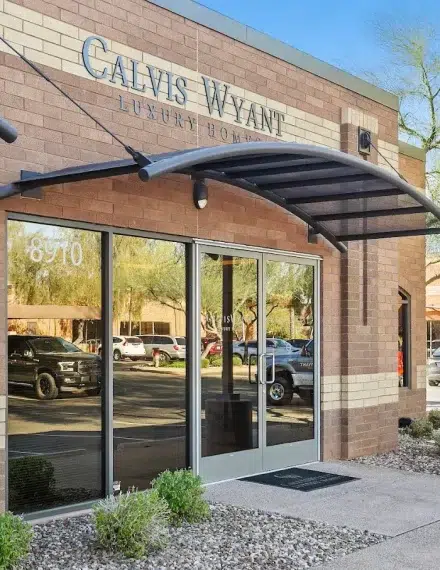
8910 East Raintree Drive #100
Scottsdale, AZ 85260